

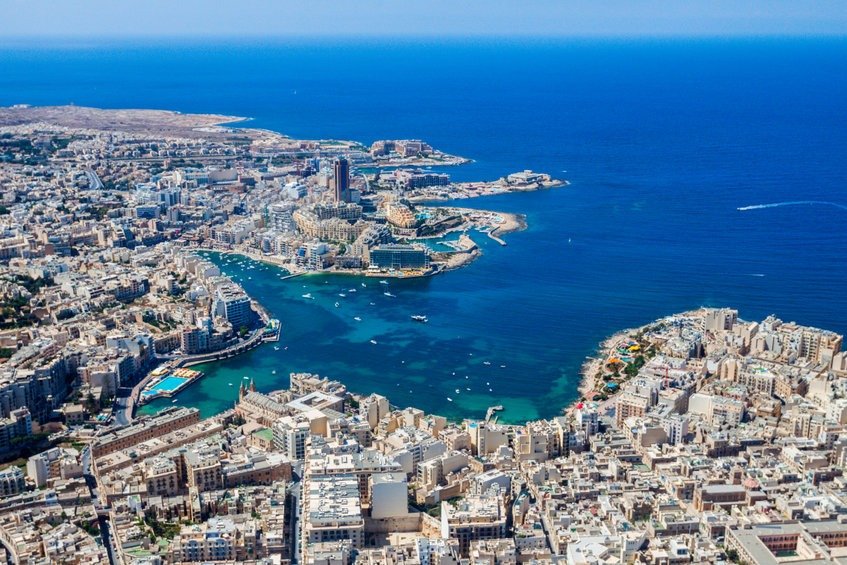
If you look at Malta right now on a map, you might almost miss it. It is a very tiny island sitting in the middle of the Mediterranean with barely enough space to notice. Yet, what happens on that small island has caught the attention of businesses from all over the world, and for very good reason. Many companies from the United States, Germany, the United Kingdom, and beyond have been quietly setting up operations there, and the numbers keep growing every year. So what is it about this little island that keeps pulling in international businesses?
A Prime Location with Full EU Access
When you look at it this way, Malta actually sits between southern Europe and North Africa. As a result, it puts it in a naturally useful spot for international trade. However, the bigger advantage is that Malta is a full member of the European Union. That membership itself is what gives any business based there direct access to a market of over 450 million people across the continent.
For companies that want to sell into Europe without dealing with customs complications and trade barriers, being based in Malta makes that pretty straightforward. So, if you are inside the EU and operating under its rules, it opens a lot of doors that would otherwise take considerable effort to push through.
The Power of English and Local Talent
One thing that makes Malta genuinely easy to work in is the language. English is one of the two official languages there, so contracts, meetings, and daily business all happen in English, without the translation headaches that come with working in other European countries.
On top of that, Malta has invested seriously in education over the years. There is a strong pool of local professionals in finance, law, technology, and marketing who are well-trained and ready to work. As such, finding good people there is far easier for many business owners.
Smart Financial Laws and Business-Friendly Taxes
Every business owner wants to protect what they earn and keep costs manageable. Malta has built a tax structure that works well for international companies. The headline corporate tax rate is currently at 35 percent, but that number is misleading on its own. What you don’t know is that foreign business owners can access a refund system that brings the effective rate down significantly once everything is calculated. The result is a tax burden that sits well below what most other European countries charge, which leaves more money in the business to put back into growth.
Why British Companies Are Making the Move
The relationship between the United Kingdom and Malta goes back a long way, and it has stayed strong even after Brexit. In fact, Brexit is one of the reasons more British companies have started looking at Malta seriously. Leaving the EU created real friction for UK businesses trying to trade freely across Europe, and many of them needed a solution.
Setting up in Malta is one of the cleanest answers to that problem. When you open a company in Malta from the UK, you step straight back inside the EU single market. Local specialists handle the registration, the paperwork, and the banking setup without you needing to travel back and forth constantly. It is a practical and well-trodden route that a growing number of UK entrepreneurs have already taken.
A Tech-Forward and Stable Government
Stability matters to business owners, and Malta delivers that. The political environment is settled, and both main parties support enterprise, which means the rules do not shift dramatically every time there is an election. Businesses can plan with confidence.
Malta has also moved early on regulation for fintech, digital assets, and blockchain technology. That has earned it a reputation as a place that welcomes innovation rather than standing in its way, and it has drawn in tech startups from across the globe as a result.
Conclusion
As you can see, size has nothing to do with opportunity, and Malta proves that clearly. It is actually a good location, and with EU access and sensible tax rules, it makes the country a more practical choice for businesses. It is no wonder foreign businesses are tapping into their market.