

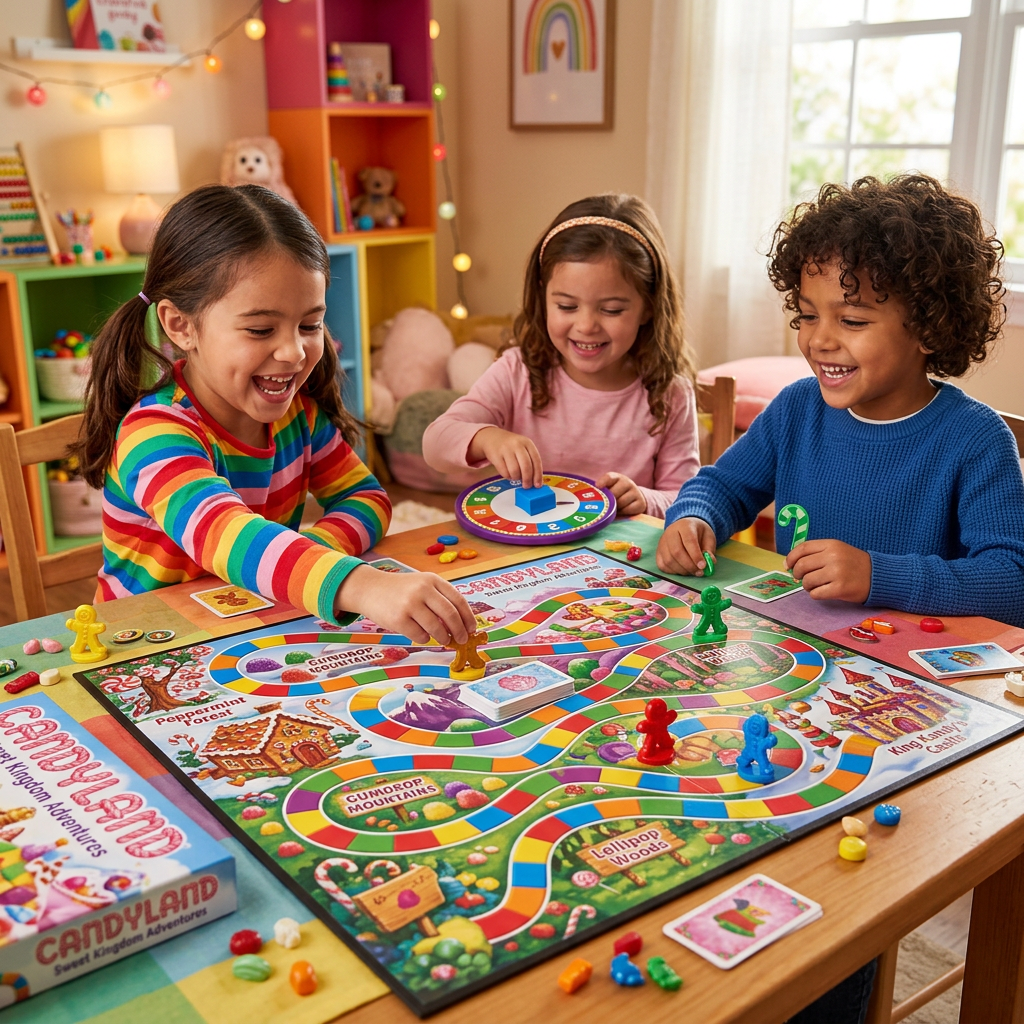
There’s something oddly comforting about a colorful board game spread across the table. Maybe it’s the bright paths, the tiny character pieces, or the simple excitement of moving one step closer to the finish line. And honestly, few games capture that feeling better than the Candyland board.
For many people, Candyland was one of the very first games they ever played. Before strategy-heavy games or complicated rulebooks entered the picture, there was a rainbow-colored path leading through candy forests, gumdrop mountains, and chocolate swamps. Simple? Absolutely. Memorable? Without question.
What makes the game interesting is that it has survived generations without really needing to reinvent itself. Kids still love it, parents still buy it, and somehow the whole thing continues to feel charming instead of outdated. That’s not easy in a world full of screens and fast-moving entertainment.
So why does this classic board game still matter today? Let’s take a deeper look at the world of Candyland and why it continues to hold a special place on family shelves.
Understanding Candyland Board
The Candyland board is a classic children’s board game designed primarily for younger players. It was originally created to be easy enough for children who cannot yet read or count. That alone makes it pretty unique.
Instead of using dice or complicated scoring systems, players move by drawing colorful cards. Each color corresponds to spaces on the board. Draw a blue card? Move to the next blue square. It’s wonderfully straightforward.
The game itself takes players through a fantasy land filled with sweets and quirky locations. Along the journey, players encounter candy-themed characters, shortcuts, and occasional setbacks. The winner is simply the first person to reach the final destination.
And yes, that simplicity is exactly why it works.
A Game Built for Beginners
Many board games unintentionally leave younger kids feeling confused or left behind. Candyland avoids that problem entirely.
Children can participate almost immediately because the mechanics are visual rather than mathematical. They don’t need advanced reading skills or strategy knowledge. They just need curiosity and a little excitement.
That accessibility has helped the game remain popular for decades.
How It Works / Key Concepts
At first glance, Candyland seems almost too simple. But that simplicity is carefully designed.
The Color-Matching System
The main mechanic revolves around matching colors from cards to spaces on the board.
Each player draws a card during their turn. The card displays one or two colored squares, and the player moves forward to the corresponding space.
Special character cards may send players farther ahead to specific locations.
There’s no need for counting spaces or planning elaborate moves. Younger children can focus entirely on the fun of progression.
The Journey Across the Board
The board itself is basically a winding path through candy-themed environments.
Some classic areas include:
- Peppermint Forest
- Gumdrop Mountains
- Chocolate Swamp
- Lollipop Woods
These locations create a playful sense of adventure. Kids aren’t just moving tokens — they feel like they’re exploring a magical world.
No Real Strategy
This is one aspect adults sometimes misunderstand.
Candyland is intentionally luck-based. There’s almost no strategic decision-making involved. The outcome depends mostly on card draws.
Oddly enough, that’s part of its appeal.
For very young children, removing competitive pressure makes the experience more enjoyable and less stressful.
Benefits / Importance / Why It Matters
It may seem like “just a children’s game,” but the Candyland board actually offers several developmental and social benefits.
Encourages Turn-Taking
One of the earliest lessons children learn from board games is patience.
Kids quickly understand that everyone gets a turn, and they must wait respectfully. That sounds small, but honestly, it’s a huge early-life skill.
Builds Color Recognition
Because the entire game revolves around matching colors, children naturally strengthen color identification skills while playing.
Learning through play tends to stick better than repetitive instruction.
Introduces Rule Following
Candyland gently teaches kids how structured games work.
They learn:
- Following instructions
- Understanding sequences
- Accepting outcomes
- Playing fairly
Those lessons transfer surprisingly well into school and group activities.
Family Bonding
There’s also the emotional side of the game.
Parents, grandparents, siblings, and kids can all play together without anyone feeling excluded. That matters more than people sometimes realize.
Not every game creates equal participation across ages.
Screen-Free Entertainment
Modern childhood is packed with digital stimulation. While technology certainly has its place, traditional board games still provide something different.
Candyland slows things down a bit.
There’s face-to-face interaction, conversation, laughter, and shared moments that don’t rely on notifications or batteries.
Practical Uses, Examples, or Applications
The Candyland board is often used in more places than just family game nights.
In Classrooms
Teachers frequently use Candyland-inspired activities to make lessons more engaging.
For example:
- Sight word Candyland
- Math fact Candyland
- Alphabet Candyland
The familiar game structure helps students feel relaxed while learning.
In Therapy and Counseling
Child therapists sometimes adapt Candyland for communication exercises.
Because the game is simple and non-threatening, children often feel more comfortable opening up during play.
Questions, emotional prompts, or social skill activities can easily be added to the game.
Family Gatherings
Candyland works especially well during holidays or family visits because younger kids can join without needing constant explanations.
And honestly, adults sometimes enjoy the nostalgia just as much as the children enjoy the gameplay.
Rainy Day Entertainment
There’s a reason parents keep returning to board games during bad weather or quiet weekends.
Candyland is quick to set up, easy to understand, and doesn’t create the frustration that more competitive games sometimes bring.
Tips, Strategies, or Best Practices
Even though Candyland is mostly luck-based, there are still ways to make the experience better and more enjoyable.
Keep the Atmosphere Light
This game works best when it feels playful rather than competitive.
Young children can become emotional about losing, so focusing on the adventure instead of the winner helps maintain a positive mood.
Use Character Voices
Some parents turn the candy characters into mini storytelling moments.
A silly voice here and there suddenly transforms the game into a tiny fantasy journey. Kids absolutely love that kind of thing.
Adapt the Rules for Younger Kids
There’s no law saying you must follow every rule perfectly.
Some families:
- Remove setback cards
- Shorten the board
- Allow second chances
Flexibility often keeps younger players engaged longer.
Combine Learning With Play
If you’re a parent or teacher, adding educational prompts can make the game even more valuable.
Simple examples include:
- Naming shapes
- Practicing letters
- Answering easy questions before moving
Kids often don’t even realize they’re learning.
Common Mistakes or Misconceptions
Candyland has been around long enough to collect a few misconceptions.
“It’s Too Simple to Matter”
Some adults dismiss the game because it lacks strategy.
But complexity isn’t always the goal.
For preschoolers, simplicity creates confidence. A child who feels successful while playing is more likely to develop interest in games and social activities later.
“Older Kids Can’t Enjoy It”
While older children may outgrow the gameplay eventually, many still enjoy the nostalgic and humorous side of Candyland.
Sometimes it becomes less about competition and more about shared family time.
“Luck-Based Games Are Bad”
Not every game needs deep tactical thinking.
Luck-based games teach acceptance, patience, and emotional regulation. Children learn that outcomes aren’t always controllable — which is actually a pretty healthy lesson.
“Board Games Are Outdated”
This one feels especially inaccurate lately.
In fact, board games have seen a strong comeback in recent years. Families increasingly want offline activities that encourage real interaction.
Candyland still fits naturally into that space.
Interesting Facts or Insights
Here are a few fascinating things many people don’t know about Candyland:
1. It Was Created During a Polio Outbreak
Candyland was invented in the late 1940s by Eleanor Abbott while recovering from polio.
She designed the game to entertain hospitalized children.
That background gives the game a surprisingly heartfelt origin story.
2. The Original Version Looked Different
Early editions of the game had different artwork and layouts compared to modern versions.
Collectors sometimes search for vintage boards because of their nostalgic charm.
3. The Characters Became Iconic
Characters like King Kandy and Queen Frostine became recognizable parts of the game’s identity.
Some children remember the characters even more vividly than the gameplay itself.
4. The Game Has Been Reimagined Multiple Times
Over the years, different editions introduced updated artwork, themed versions, and redesigned paths.
Still, the core gameplay remained almost unchanged.
5. Candyland Helped Shape Modern Children’s Games
Many beginner board games borrowed ideas from Candyland’s accessible design philosophy.
Its influence is bigger than most people realize.
6. It’s Often a Child’s First Board Game
For countless families, Candyland serves as an introduction to the entire world of tabletop gaming.
That first experience can leave a lasting impression.
7. Adults Feel Surprisingly Nostalgic About It
Even people who haven’t played in years often smile the moment they see the colorful board.
That emotional connection says a lot about the game’s staying power.
FAQs
What age group is the Candyland board designed for?
Candyland is generally designed for children ages 3 and up. The simple color-based gameplay makes it ideal for preschoolers and early learners.
How long does a typical Candyland game last?
Most games take around 15 to 30 minutes, depending on the number of players and card draws.
Does Candyland require reading skills?
No, and that’s one of its biggest strengths. Children can play by recognizing colors and symbols without needing to read instructions during gameplay.
Is the Candyland board purely luck-based?
Mostly, yes. Players move according to randomly drawn cards, which keeps the game fair and easy for younger children.
Why is Candyland still popular today?
The game remains popular because it’s simple, nostalgic, family-friendly, and accessible for very young players. It creates shared experiences without requiring screens or advanced skills.
Conclusion
The Candyland board may look like a simple children’s game, but its lasting popularity tells a bigger story. It represents imagination, family connection, and the joy of uncomplicated fun.
Not every game needs complex rules or intense strategy to matter. Sometimes the best experiences come from colorful paths, silly characters, and a child excitedly drawing the next card.
That’s probably why Candyland continues to survive generation after generation. Parents introduce it to their kids, who eventually grow up and pass it along again. Few games manage to create that kind of tradition.
And honestly? In a world that often feels overly fast and complicated, there’s something refreshing about a game where the biggest concern is reaching the candy castle first.
Also read :Reunion Word Game: Why This Brainy Puzzle Trend Keeps Players Hooked