

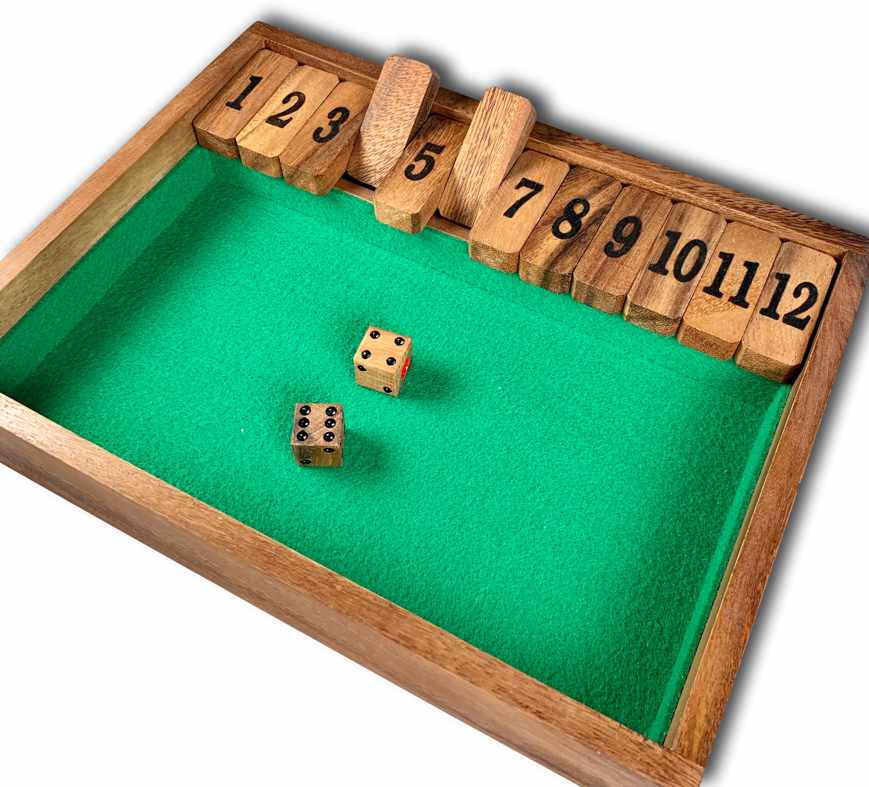
Some games are loud and flashy. Others quietly pull you in without warning. The Shut the box game falls into that second category.
At first glance, it almost looks too simple to be interesting. A small wooden board, a pair of dice, and numbered tiles. That’s it. But then you play one round… and suddenly you’re trying “just one more game” for the next half hour.
There’s something oddly satisfying about flipping those little numbers down one by one. It feels part puzzle, part luck, and part strategy. And honestly, that mix is probably why the game has survived for centuries without needing fancy graphics or complicated rules.
Whether you’ve seen it in pubs, classrooms, family game nights, or online gaming apps, the Shut the box game continues to charm people of all ages. It’s easy to learn, quick to play, and surprisingly competitive once everyone gets into it.
Let’s take a deeper look at why this classic dice game still matters today.
Understanding Shut the Box Game
The Shut the box game is a traditional dice game usually played with a wooden board containing numbered tiles. Most versions feature numbers from 1 to 9, though some boards go up to 12.
The goal is simple: roll the dice and “shut” numbers that add up to the total rolled. If you roll an 8, for example, you might shut the number 8 itself or combine smaller numbers like 5 and 3.
The round continues until no more valid moves remain. The numbers left open become your score. Lower scores are better, and shutting every number means you’ve achieved the perfect round — literally “shutting the box.”
It sounds straightforward, but the strategy sneaks up on you. That’s where the fun begins.

A Brief Look at Its Origins
Historians believe the game dates back hundreds of years and was especially popular among sailors and fishermen in Europe. Over time, it spread into pubs, homes, and schools.
Interestingly, different countries developed slightly different rules. Some play with one die under certain conditions, while others use two dice throughout the game.
That flexibility is part of its charm. There’s no single “official” way everyone agrees on.
How It Works / Key Concepts
Learning the rules of the Shut the box game usually takes less than five minutes. Mastering it? That’s another story.
The Basic Setup
Most traditional boards include:
- Numbered tiles
- Two dice
- A wooden or felt playing surface
Players take turns rolling the dice and covering numbers that equal the dice total.
For example:
- Roll = 9
- Possible choices:
- 9
- 4 + 5
- 6 + 3
- 2 + 3 + 4
Once a number is shut, it stays closed for the rest of the round.
When the Turn Ends
Your turn ends when:
- You cannot make a valid number combination
- All numbers are shut
- You choose a risky strategy that backfires
The remaining open numbers are added together for your score.
Winning the Game
There are several ways to determine a winner:
Lowest Score Wins
The most common format. After everyone plays a round, the player with the lowest remaining total wins.
Exact Shut Wins Instantly
If a player closes every number, they win immediately.
Multiple-Round Format
Some families or groups play several rounds and track points over time.
It really depends on the mood of the table.
Benefits / Importance / Why It Matters
You might think the Shut the box game is just casual entertainment, but it actually offers more benefits than people realize.
Encourages Mental Math
This is probably the biggest hidden advantage.
Players constantly calculate combinations, probabilities, and number patterns without even noticing they’re practicing math skills.
Kids especially benefit because the learning feels natural rather than forced.
Easy for Almost Anyone to Play
Some board games require long explanations and patience. This one doesn’t.
Grandparents can play with children. Friends can learn in minutes. Even people who usually avoid games tend to enjoy it quickly.
That accessibility matters more than ever today.
Creates Genuine Social Interaction
Phones and screens dominate so much of daily life now that simple face-to-face games feel refreshing again.
The Shut the box game encourages:
- Conversation
- Friendly competition
- Shared laughter
- Quick replayability
Sometimes the simplest games create the best memories.
Portable and Low-Tech
No batteries. No updates. No internet required.
You can bring it:
- On trips
- To cafes
- Into classrooms
- To family gatherings
Honestly, there’s something comforting about games that still work perfectly without technology.
Practical Uses, Examples, or Applications
The Shut the box game appears in more places than many people expect.
Family Game Nights
This is probably its most common use today.
Because rounds are short, nobody gets stuck waiting too long for their turn. That keeps energy levels high, especially with younger players.
Educational Settings
Teachers sometimes use the game to help students improve:
- Addition skills
- Number recognition
- Strategic thinking
- Probability awareness
And since students think they’re “just playing,” resistance tends to disappear.
That’s a clever trick, honestly.
Bars and Pubs
Traditional pubs in parts of Europe have featured versions of the game for decades.
The relaxed pace works well in social environments where people want something interactive but not overly intense.
Online and Mobile Versions
Modern apps have revived interest in the game among younger audiences.
Digital versions often include:
- Multiplayer modes
- Timed challenges
- Daily scoreboards
- AI opponents
Still, many players say the wooden physical version feels more satisfying.
And they may have a point.
Tips, Strategies, or Best Practices
Luck matters in the Shut the box game, but strategy absolutely plays a role too.
Prioritize Higher Numbers Early
Many experienced players try to remove numbers like 7, 8, and 9 first.
Why?
Because large totals become harder to manage later in the game when fewer options remain.
Keep Flexible Combinations Available
Sometimes shutting one number seems tempting, but preserving flexibility can help more in the long run.
For example:
- Closing 8 may feel smart
- But using 5 + 3 might create better future combinations
This balancing act adds surprising depth.
Watch Probability Patterns
Some totals appear more often than others with two dice.
The most common rolls include:
- 6
- 7
- 8
Smart players consider probability before making decisions.
Don’t Panic Near the End
Many rounds collapse when only a few numbers remain open.
Ironically, staying calm matters because rushed choices often lead to dead ends.
And yes, everyone eventually learns this the hard way.
Common Mistakes or Misconceptions
Despite its simplicity, beginners often misunderstand a few important things.
Assuming It’s Pure Luck
Dice obviously involve randomness, but decision-making matters too.
Two players can roll identical numbers and end with very different results based on their choices.
Closing Small Numbers Too Early
New players often eliminate numbers 1, 2, and 3 immediately.
That can create problems later because smaller combinations provide flexibility for future rolls.
Overcomplicating the Rules
Some people think there must be hidden advanced rules because the game looks old-fashioned.
Actually, the simplicity is intentional.
The beauty of the Shut the box game comes from how much depth emerges from very basic mechanics.
Ignoring Risk Management
Sometimes the “obvious” move isn’t the smartest one.
Players who never think ahead usually struggle against more experienced opponents.
Interesting Facts or Insights
Here are a few fun things many people don’t know about the Shut the box game.
1. It Was Once Associated With Gambling
Historically, sailors and pub-goers often played for money or drinks.
In some places, betting versions still exist today.
2. Different Boards Use Different Numbers
Some boards go:
- 1 to 9
- 1 to 10
- 1 to 12
Each version slightly changes strategy and difficulty.
3. Perfect Games Are Rare
Shutting every number completely is harder than it looks.
That rare success makes the game oddly thrilling.
4. It’s Popular in Homeschooling
Parents often use the game as a stealth learning tool for math practice.
And honestly, it works surprisingly well.
5. Probability Plays a Bigger Role Than Expected
Experienced players sometimes memorize common dice probabilities to improve decision-making.
That adds a subtle layer of skill beneath the casual appearance.
6. Some Versions Use One Die Late in the Game
Certain rule sets allow players to switch to one die once high numbers are closed.
This dramatically changes strategy.
7. Handmade Boards Are Still Popular
Despite mass production, many woodworkers still create handcrafted Shut the box boards because the game has such a timeless aesthetic.
FAQs
Is Shut the box game based more on luck or skill?
It’s a mix of both. Dice rolls introduce luck, but smart decision-making and probability awareness can significantly improve your chances.
Can children play the Shut the box game?
Absolutely. The game is simple enough for children while still being entertaining for adults. It’s especially helpful for practicing basic math skills.
How many players can join?
Most versions support 2–4 players comfortably, though people often create tournament-style rotations for larger groups.
What is the best strategy in Shut the box game?
Many experienced players focus on removing higher numbers early while preserving flexible combinations for future turns.
Is Shut the box game educational?
Yes, surprisingly so. It encourages mental arithmetic, logical thinking, and probability awareness in a fun, low-pressure environment.
Conclusion
The Shut the box game proves that a game doesn’t need flashy graphics or complicated mechanics to stay relevant for generations.
Its appeal comes from balance. It’s simple without being boring, strategic without being overwhelming, and competitive without becoming stressful. Few games manage that combination so naturally.
Maybe that’s why people keep returning to it year after year. One quick round turns into several. Friendly matches suddenly become serious competitions. And somewhere along the way, players realize they’re completely hooked by a wooden box and two small dice.
Also read :Army navy game: Why This Historic Football Rivalry Still Feels Different