

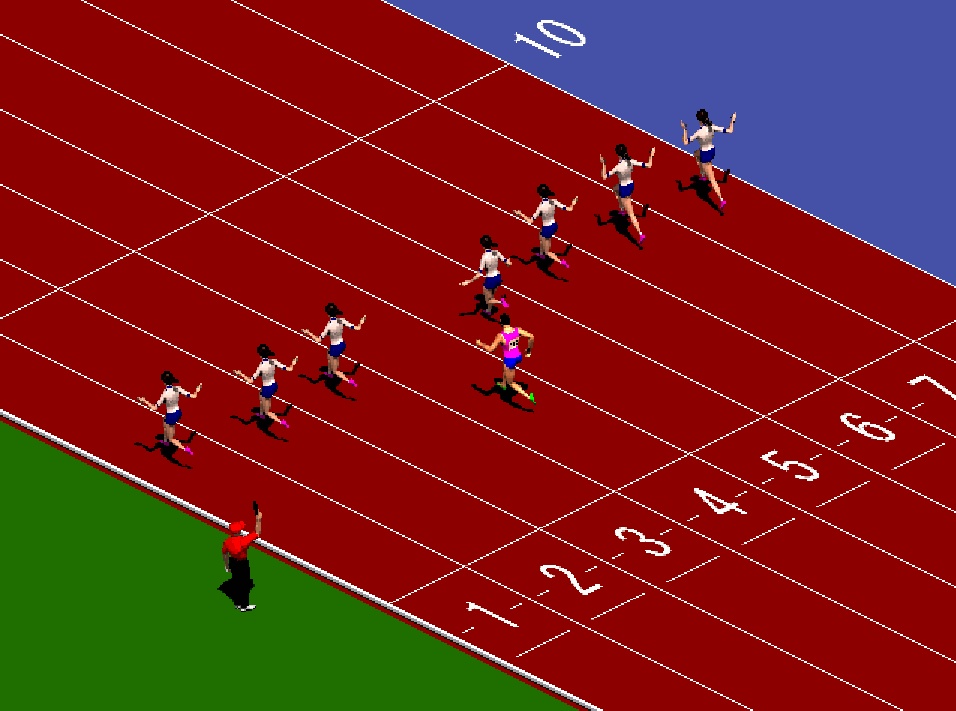
Speed has always had a special place in games. The rush of reacting in the moment, the tension of shaving milliseconds off a run, and the quiet satisfaction of mastering a tight mechanic all come together in experiences built around momentum. The modern arcade spirit lives on in sprint-based challenges that reward clarity of thought as much as nimble fingers. At the center of that appeal sits the Sprinter game, a deceptively simple concept that asks players to move fast, think faster, and learn from every stumble.
What draws people in is not spectacle alone. It is the promise of improvement. Each attempt feels like a clean slate. Each failure teaches something small but useful. Over time, those lessons stack into real progress, and progress is what keeps players coming back.
Why Speed-Centric Games Still Matter
Speed-focused games thrive because they speak to a basic human urge to test limits. Whether it is a runner chasing a personal best or a player chasing a new record, the appeal is the same. You are competing with time, with precision, and with your own habits.
These games also fit modern attention spans. Short runs, instant feedback, and clear outcomes create a loop that is easy to enter and hard to leave. You can play for two minutes or two hours. The experience scales to the moment you have available.
The psychology of fast feedback
Fast feedback loops sharpen learning. When the result of a decision appears immediately, the brain forms stronger associations. Miss a timing window and you feel it. Nail a sequence and the rhythm locks in. This clarity makes practice feel purposeful rather than abstract.
The appeal of mastery
Mastery is not about perfection. It is about consistent improvement. Speed games offer visible metrics, such as completion time or streaks, that make growth tangible. That sense of trajectory, even when progress is slow, builds motivation.
Core Mechanics That Define the Experience
At its heart, the Sprinter game centers on timing, rhythm, and momentum. The mechanics are often minimal by design. That simplicity creates space for depth, where small optimizations matter.
Movement as a language
Movement is communication between the player and the system. Press too early and you lose speed. Press too late and you break flow. Over time, the player learns the cadence of the track, the spacing of obstacles, and the tempo of acceleration.
Risk and reward in motion
Speed invites risk. The faster you go, the smaller the margin for error. Many sprint-style designs include optional shortcuts or aggressive lines that promise better times at the cost of higher failure rates. Choosing when to take those risks becomes a strategic decision rather than a reflex.
Flow states and rhythm
When mechanics align with the player’s internal rhythm, flow emerges. The sense of being “in the zone” is not accidental. It is the result of clear goals, immediate feedback, and a challenge curve that stretches skill without breaking it.
Learning Curves That Respect the Player
A well-tuned sprint experience welcomes beginners without flattening the ceiling for experts. Early stages teach fundamentals through repetition. Later stages introduce layered challenges that demand refined control.
Gentle onboarding
The first moments matter. New players need space to understand timing windows and movement physics without punishment that feels arbitrary. Early successes build confidence and set expectations for fairness.
Depth through variation
As difficulty increases, variety prevents fatigue. Changes in terrain, timing patterns, or environmental constraints refresh the core loop without abandoning it. The player remains grounded in familiar rules while adapting to new contexts.
Failure as information
Failure should teach, not frustrate. Clear visual cues, readable animations, and consistent rules help players understand why they failed. When mistakes feel fair, players are more likely to try again.
Design Choices That Shape Engagement
Good design is invisible when it works. In sprint-focused titles, small choices around pacing and feedback can define whether the experience feels sharp or sloppy.
Visual clarity
At high speeds, clutter is the enemy. Clean silhouettes, strong contrast, and readable lanes help players parse information quickly. When the environment communicates intent, reaction times improve naturally.
Sound as guidance
Audio cues reinforce timing. Footsteps, impact sounds, and subtle tempo shifts anchor rhythm. Well-designed soundscapes reduce cognitive load by turning timing into something you can feel, not just see.
Progress systems that motivate
Progression should respect the player’s time. Unlocks, cosmetic rewards, or new modes provide milestones without gating core fun. The goal is to enhance motivation, not to pad playtime.
Community and the Joy of Shared Benchmarks
Speed games shine brighter when shared. Watching a friend shave seconds off a run or discovering a clever route builds a sense of communal discovery.
Friendly competition
Leaderboards and time trials spark healthy rivalry. The best systems highlight personal improvement first, then contextualize performance within a wider community. Competing with your own past self is often the most meaningful metric.
Learning from others
Watching replays or studying routes exposes new strategies. Even without formal tutorials, communities often surface optimal lines and timing tricks. This informal knowledge exchange keeps the experience fresh long after release.
Celebrating small wins
Not every achievement needs fireworks. Sometimes beating your previous time by a fraction is enough. Communities that celebrate incremental progress foster inclusive motivation rather than elitism.
Accessibility and Fair Challenge
Speed should never come at the cost of accessibility. Thoughtful options broaden the audience without diluting the core challenge.
Control customization
Different players have different rhythms. Adjustable sensitivity, remappable inputs, and alternative control schemes allow more people to find a comfortable setup. Comfort supports consistency, and consistency supports improvement.
Visual and cognitive support
High-contrast modes, motion clarity options, and simplified backgrounds help players who struggle with visual overload. These choices do not make the game easier. They make it more readable.
Fairness over punishment
Harsh penalties can turn practice into anxiety. Smart checkpointing and quick restarts respect the player’s momentum. When recovery is swift, players stay engaged.
Strategy: Getting Faster Without Burning Out
Improvement is a craft. The fastest players rarely rely on raw reflex alone. They cultivate habits that compound over time.
Break runs into segments
Practice difficult sections in isolation when possible. Mastering a single tricky transition can unlock better times across the entire course. Segment practice builds confidence where it matters most.
Build a pre-run routine
Consistency starts before the timer. Simple rituals, such as a deep breath or a brief visual scan, help settle focus. Over time, these routines prime the mind for flow.
Rest to sharpen performance
Speed suffers when fatigue sets in. Short, focused sessions often outperform marathon grinds. Step away, let patterns consolidate, and return with fresh eyes.
The Broader Influence of Sprint Mechanics
Sprint-style design principles echo across genres. Platformers borrow rhythm-based movement. Action games integrate momentum systems. Even puzzle experiences adopt time-pressure modes to heighten engagement.
Rhythm in unexpected places
Timing challenges create tension and release. When applied thoughtfully, rhythm mechanics add texture to genres that might otherwise feel static. The result is a sense of motion even in stillness.
Skill expression as identity
Players express themselves through routes and styles. Two people can complete the same course with different rhythms, risks, and preferences. That personal signature is a quiet form of creativity.
Longevity through simplicity
Simple cores endure. When the rules are clean, designers can layer modes, challenges, and variations without bloating the experience. Longevity grows from clarity.
Mastering the Sprinter game
Mastery of the Sprinter game begins with attention to fundamentals. Speed is not about rushing. It is about removing waste from movement and thought. The cleanest runs often look calm rather than frantic.
Timing before speed
Chasing speed too early builds sloppy habits. Focus first on hitting windows consistently. When timing stabilizes, speed follows naturally. Precision is the foundation that supports acceleration.
Reading the course
Every track tells a story. Patterns repeat. Hazards telegraph their rhythms. Learn the language of the environment and your reactions become anticipatory rather than reactive. Anticipation is the hidden engine of fast play.
Micro-optimizations
Small gains compound. A tighter line here, a smoother transition there, and the timer drops without drama. Record mental notes after each run and test one change at a time. Clarity beats chaos.
Building a Healthy Relationship With Competition
Competition can motivate, but it can also distort enjoyment if left unchecked. The healthiest approach treats benchmarks as guides, not judgments.
Compare with context
A record set by a veteran does not define your worth. Measure progress against your own history. When improvement is framed as a personal journey, pressure softens into purpose.
Keep play playful
Fun is the fuel that sustains practice. If frustration rises, switch modes, explore a different route, or take a break. Playfulness keeps the craft light and the mind open.
Share insights generously
Teaching reinforces learning. When you explain a route or rhythm to someone else, you clarify your own understanding. Communities grow stronger when knowledge circulates freely.
Crafting Memorable Moments
Speed games create moments that linger. The near-miss that somehow turns into a perfect landing. The run where everything clicks. These moments are small, but they carry emotional weight.
The quiet triumph of consistency
Not every victory is dramatic. Stringing together clean runs builds a quiet confidence. That confidence shows in posture, in timing, in the way hesitation fades.
The beauty of recovery
Mistakes happen. The art lies in recovery. Salvaging a run after a stumble teaches resilience. Over time, recovery becomes as important as raw execution.
The rhythm of return
Players return because the rhythm calls them back. The loop of attempt, learn, and improve is simple and honest. It respects the player’s agency and rewards patience.
Looking Ahead: The Future of Speed-Focused Play
As hardware and design tools evolve, sprint experiences will gain nuance without losing their core. Better haptics can convey rhythm through touch. Smarter analytics can guide practice without dictating it. The heart of the experience, however, will remain the same.
Designers will continue to explore how speed intersects with narrative, environment, and emotion. The goal is not to overwhelm players with complexity but to give them richer spaces in which to express mastery.
In the end, the Sprinter game endures because it honors a simple truth. Improvement feels good. Movement feels good. When those two meet in a fair, readable system, players find a place to test themselves and to grow. Speed becomes more than a number on a clock. It becomes a way to learn about patience, focus, and the quiet satisfaction of getting a little better today than you were yesterday.
FAQs
What is a sprinter-style game?
A sprinter-style game focuses on speed, timing, and momentum. Players aim to complete short, intense runs while refining precision and rhythm to achieve better results.
Is a sprinter game more about reflexes or strategy?
It blends both. Quick reactions matter, but long-term improvement comes from learning patterns, planning routes, and making smart risk decisions.
How can beginners improve quickly?
Start by mastering timing over raw speed, practice difficult sections, and keep sessions short and focused to avoid fatigue.
Are sprint-based games suitable for casual players?
Yes. Many offer short sessions and quick restarts, making them easy to enjoy casually while still rewarding deeper mastery.
Why do speed-focused games stay engaging over time?
Clear feedback, visible progress, and the satisfaction of small improvements keep players motivated and coming back for another run.
Also read :Split fiction game: A New Way to Experience Storytelling in Games