
Video games have long been associated with screens, controllers, and digital worlds. Yet sometimes the most innovative ideas emerge when technology blends with something surprisingly simple. That was exactly the concept behind Nintendo labo, a creative gaming platform that combined physical building with digital interaction. Instead of relying only on traditional gameplay mechanics, it invited players to construct their own cardboard creations and bring them to life through the Nintendo Switch.
The concept challenged expectations about what a gaming experience could be. Players were not just consumers of content but active creators. Building, experimenting, and learning became part of the experience. The result was a project that merged art, engineering, and play in a way rarely seen in the gaming industry.
Over time, the platform became known for its ability to spark curiosity and creativity, especially among younger audiences. But its appeal extended far beyond children. Adults, educators, and technology enthusiasts also found value in the playful innovation behind the system.
The Idea Behind Nintendo Labo
The origin of Nintendo labo reflects the long tradition of playful experimentation that has defined Nintendo’s approach to entertainment. Instead of focusing solely on powerful hardware or realistic graphics, the company often explores imaginative ways to interact with games.
This philosophy led to the idea of combining simple cardboard structures with motion sensors and software. The Nintendo Switch console already included technology capable of detecting movement, orientation, and infrared signals. Designers realized that by attaching the console and its controllers to carefully designed cardboard structures, entirely new forms of gameplay could emerge.
Blending Physical and Digital Worlds
What makes the concept unique is the way it merges two very different forms of play. On one hand, there is the hands-on process of assembling cardboard components. On the other, there is the digital game that responds to those creations.
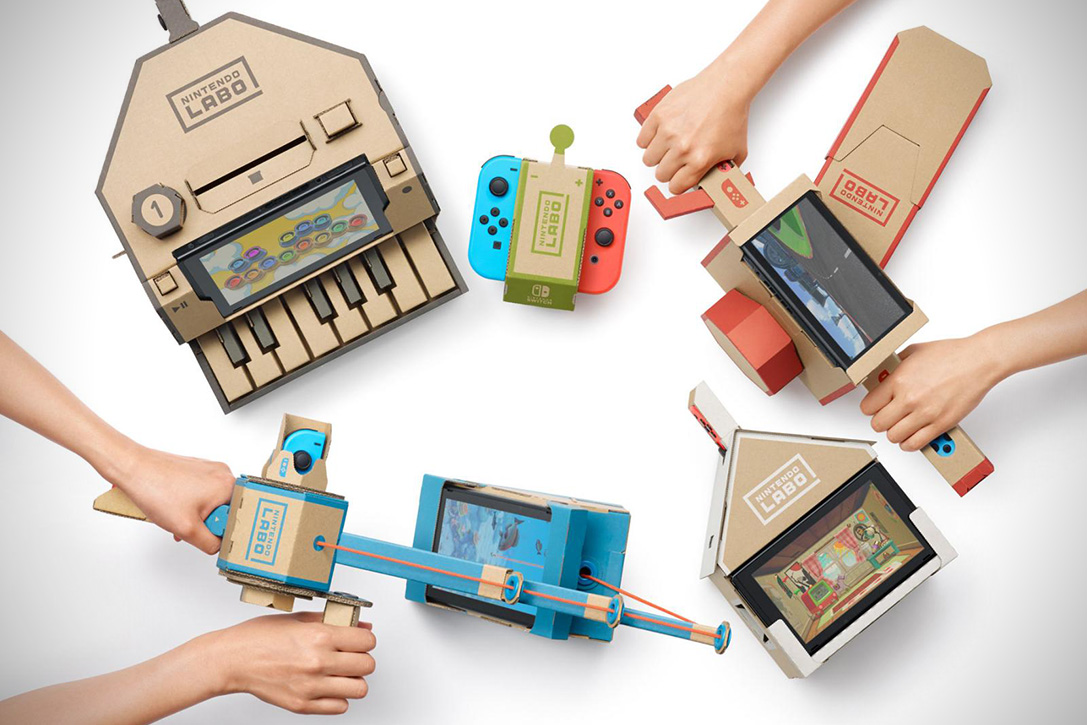
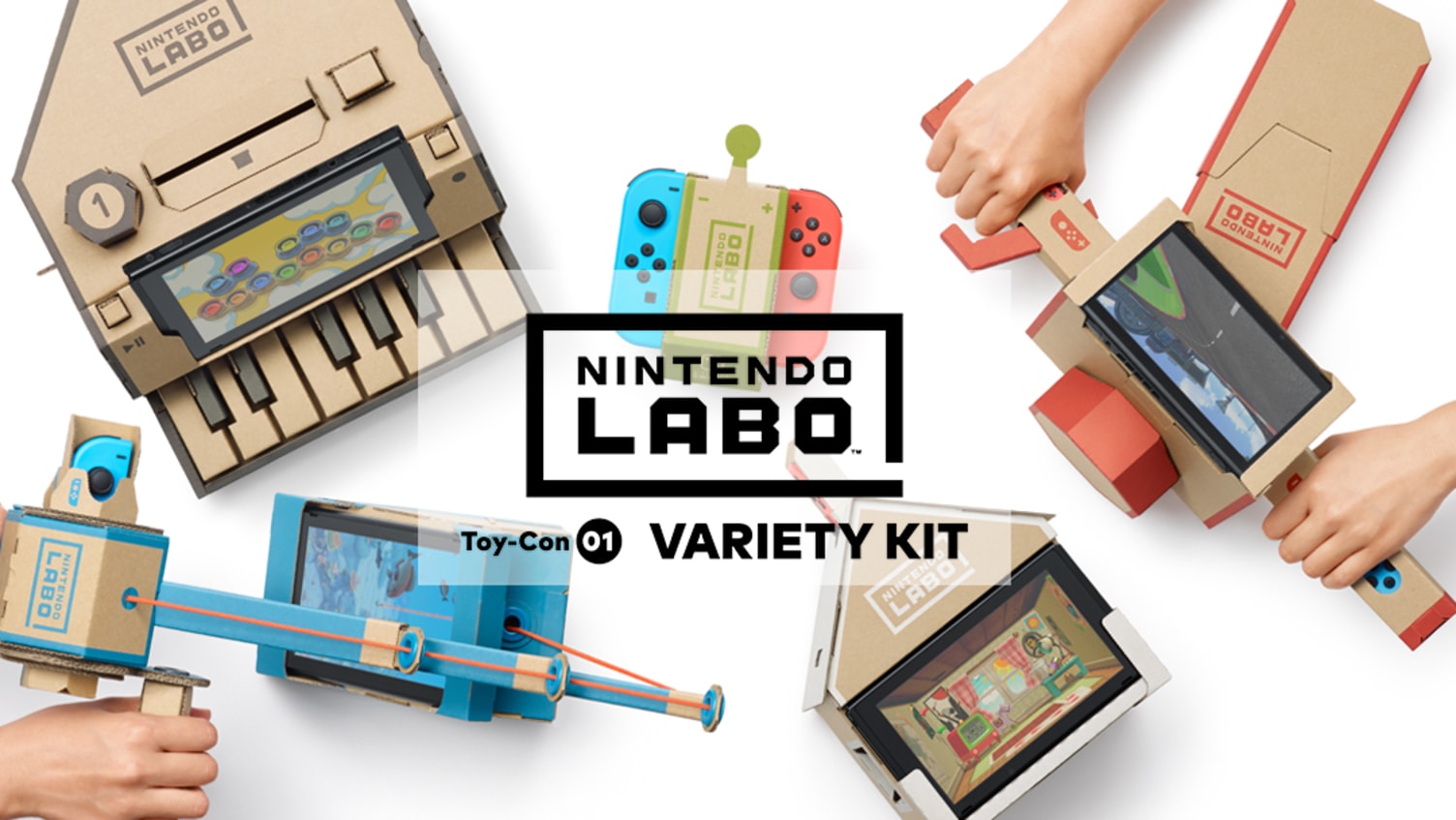
Players begin by constructing objects known as Toy-Con devices. These cardboard creations include items such as pianos, fishing rods, vehicles, and robotic suits. Once assembled, they interact with the console’s controllers to produce real-time responses within the game environment.
Learning Through Building
The building process itself is an important part of the experience. Instructions are presented in an interactive format, guiding players step by step. As each piece is assembled, players gain a clearer understanding of how mechanical movement translates into digital input.
This approach transforms the game from a passive activity into a learning experience. Children develop patience, attention to detail, and an appreciation for design and engineering.
Encouraging Curiosity
Many players discover that the most enjoyable aspect of the system is experimentation. After building a Toy-Con device, they often begin exploring how it works internally. Some even modify their creations to see how changes affect gameplay.
This curiosity-driven exploration reflects the broader philosophy behind the project.
Nintendo Labo and the Rise of Creative Gaming
As gaming technology continues to evolve, developers increasingly look for ways to make interactive experiences more engaging. Nintendo labo stands out because it focuses not only on playing games but also on creating them.
A New Type of Controller
Traditional game controllers follow a standardized design. Buttons, joysticks, and triggers have remained relatively consistent across decades. The Toy-Con creations introduced an entirely different approach.
Each cardboard structure functions as a specialized controller designed for a specific activity. A piano Toy-Con allows players to perform music by pressing cardboard keys. A fishing rod Toy-Con simulates casting and reeling in a line.
This variety transforms the console into a flexible platform capable of supporting many types of experiences.
Hands-On Interaction
Physical interaction adds a sense of realism and immersion that traditional controllers sometimes lack. Pulling a fishing rod or steering a cardboard vehicle feels intuitive because the movement resembles real-world actions.
This connection between physical gestures and digital responses makes the experience accessible even for players who rarely play video games.
A Gateway to Creativity
Many players begin thinking beyond the provided instructions. They experiment with new cardboard designs, combine different pieces, and explore unusual gameplay ideas.
The system encourages imagination rather than strict adherence to rules.
Educational Potential
Educators quickly recognized that the system could serve as a powerful teaching tool. Because it combines building, technology, and experimentation, it fits naturally into learning environments.
Understanding Basic Engineering
Building Toy-Con devices introduces players to fundamental mechanical principles. Hinges, levers, and tension systems become visible parts of the design.
Students begin to see how simple mechanical movements can be translated into electronic signals.
Exploring Programming Concepts
The software includes tools that allow players to experiment with logic and programming-like structures. By connecting inputs and outputs, they can create unique interactions between their cardboard creations and the digital world.
This feature encourages problem solving and logical thinking.
Inspiring STEM Learning
Science, technology, engineering, and mathematics education often benefits from hands-on experiences. Constructing devices and observing their behavior helps students understand abstract concepts more clearly.
The playful nature of the system makes these lessons enjoyable rather than intimidating.
Design Philosophy and Innovation
Nintendo has always been known for unconventional ideas. Instead of competing solely on hardware specifications, the company focuses on unique forms of interaction.
Simplicity as a Strength
Cardboard may seem like an unusual material for a gaming accessory. However, its simplicity is part of the concept’s charm. Cardboard is inexpensive, lightweight, and easy to manipulate.
Players can cut, decorate, and modify it freely without worrying about damaging expensive equipment.
The Joy of Assembly
Building something with your own hands creates a sense of ownership. When players finish assembling a Toy-Con device, they feel proud of the result.
This emotional connection enhances the overall experience.
A Balance Between Structure and Freedom
While the kits provide clear instructions, they also leave room for creativity. Players can decorate their creations with markers, stickers, or paint.
The result is a personalized gaming accessory that reflects the player’s imagination.
Expanding the Experience
As the concept evolved, new kits introduced additional possibilities. Some focused on vehicles, allowing players to control cars, planes, and submarines. Others emphasized robotics and large-scale movements.
Immersive Role-Playing
One of the most ambitious creations allowed players to wear a cardboard backpack connected to strings and pulleys. By moving their arms and legs, they could control a giant robot within the game.
This design demonstrated how physical movement could translate into large-scale digital actions.
Musical Exploration
Another Toy-Con device transformed the console into a miniature piano. Players could compose music, experiment with different sounds, and learn basic musical concepts.
This feature appealed not only to gamers but also to music enthusiasts.
Vehicle Adventures
Driving a cardboard steering wheel or controlling a flight joystick added a new level of immersion. These experiences made the player feel more directly involved in the virtual world.
The diversity of gameplay kept the concept fresh and engaging.
Community and Creativity
One of the most fascinating aspects of Nintendo labo is the creative community that formed around it. Players began sharing their own inventions and modifications.
Custom Designs
Some enthusiasts built entirely new cardboard devices that interacted with the console in unexpected ways. These creations ranged from musical instruments to complex mechanical machines.
The openness of the system encouraged experimentation.
Online Inspiration
Communities dedicated to creative gaming projects often showcase innovative uses of the technology. Seeing what others have built inspires new ideas and encourages further experimentation.
This collaborative spirit reflects the playful philosophy behind the concept.
A Platform for Makers
The project attracted attention from hobbyists interested in design, crafting, and electronics. For them, the system became a platform for creative expression.
It demonstrated that video games can intersect with maker culture in exciting ways.
Challenges and Limitations
Despite its creativity, the concept faced certain challenges. Cardboard constructions, while innovative, require careful handling to maintain durability.
Durability Concerns
Frequent use can cause wear on cardboard structures. Players sometimes reinforce their creations with tape or additional materials.
While this issue does not diminish the creative experience, it highlights the importance of careful assembly.
Learning Curve
Younger players may need assistance during the building process. Some designs involve multiple steps and precise folding techniques.
However, completing these challenges often leads to a greater sense of achievement.
Niche Appeal
The concept appeals strongly to creative and curious players, but not everyone is interested in assembling cardboard devices. Some gamers prefer more traditional gameplay experiences.
Even so, the project succeeded in demonstrating a different direction for interactive entertainment.
The Future of Creative Gaming
Innovative ideas often influence the direction of future technologies. The concept behind Nintendo labo highlights the potential of combining physical construction with digital interaction.
Hybrid Play Experiences
Future gaming platforms may continue exploring ways to blend physical and digital worlds. Sensors, motion tracking, and augmented reality can expand these possibilities.
Hands-on interaction remains an exciting frontier for game design.
Education and Entertainment Together
The success of creative gaming concepts suggests that entertainment and education do not need to exist separately. When learning feels like play, curiosity naturally grows.
Games that encourage building, experimenting, and problem solving may become increasingly popular in classrooms and homes alike.
A Legacy of Imagination
Projects like this remind players that innovation often begins with simple ideas. A piece of cardboard and a creative concept can inspire new forms of interaction.
This spirit of experimentation has long defined Nintendo’s approach to gaming.
Conclusion
The concept of Nintendo labo represents a bold and imaginative step in the evolution of interactive entertainment. By combining cardboard construction with digital gameplay, it transformed players into creators and explorers.
Instead of focusing solely on graphics or competition, the experience emphasized curiosity, creativity, and hands-on learning. Players discovered that building something with their own hands could enhance the joy of gaming.
Beyond entertainment, the project demonstrated the educational potential of interactive technology. It encouraged experimentation, engineering thinking, and artistic expression.
In a world where gaming often moves toward increasingly complex digital environments, the simplicity of cardboard and imagination stands out. The project reminds us that innovation does not always require advanced materials or massive budgets. Sometimes it begins with a simple idea and the willingness to play.
FAQs
What is Nintendo Labo?
Nintendo Labo is an interactive gaming concept for the Nintendo Switch that combines cardboard building kits with digital gameplay. Players assemble cardboard creations, called Toy-Con devices, which interact with the console’s controllers to create unique gaming experiences.
How does Nintendo Labo work?
Players first build cardboard structures using pre-cut sheets and guided instructions. After assembly, the Nintendo Switch console and its controllers are inserted into the Toy-Con creations, allowing movements and actions to be translated into gameplay.
Is Nintendo Labo suitable for children?
Yes, Nintendo Labo is especially popular among children because it encourages creativity, problem-solving, and hands-on learning. However, adults and hobbyists also enjoy the building process and experimental gameplay.
What skills can players learn from Nintendo Labo?
Players can develop basic engineering knowledge, creativity, and problem-solving skills. The building process introduces concepts such as mechanics, design thinking, and interactive technology.
Do you need special tools to build Nintendo Labo kits?
No special tools are required. The cardboard pieces are pre-cut and designed to be assembled by folding and connecting them according to the instructions provided in the software.
Also read: Math Blaster: The Game That Made Learning Mathematics an Adventure