


Baseball video games have long held a special place among sports fans. For many players, stepping onto a digital diamond offers a way to experience the tension, strategy, and excitement of the sport without leaving the couch. Over the years, one franchise has consistently stood at the center of that experience. With each release, expectations grow higher as fans hope for deeper realism, better gameplay, and more immersive modes.
The arrival of MLB The Show 25 represents another step forward in that journey. The game builds on a strong foundation while refining many of the mechanics that longtime players have come to appreciate. From visual improvements to gameplay adjustments and expanded modes, the newest installment aims to capture the rhythm of real baseball more faithfully than ever before.
This article explores the most important aspects of the game, including its gameplay systems, presentation, modes, and the ways it continues to shape the future of baseball gaming.
The Evolution of MLB The Show 25
Every yearly sports title faces a difficult balance. Developers must introduce fresh features while maintaining the core mechanics that fans already love. MLB The Show 25 manages to achieve that balance by focusing on refinement rather than unnecessary reinvention.
At its heart, the series remains committed to realism. The pacing of games, the importance of pitch selection, and the psychological duel between pitcher and batter remain central to the experience. Instead of drastically altering these elements, the developers have polished them to feel smoother and more responsive.
Player movement on the field feels more fluid, particularly during defensive plays. Outfielders track fly balls with improved animations, while infield reactions feel sharper during groundball situations. These subtle upgrades make gameplay feel more natural without changing the familiar controls players already understand.
The physics system has also received careful tuning. Ball contact now produces a wider range of outcomes depending on timing, swing path, and pitch location. A perfectly timed hit might result in a powerful line drive, while a slightly mistimed swing could produce a soft grounder. This creates a sense that every at-bat carries genuine unpredictability, much like the real sport.
Another noticeable improvement is the pacing of games. The transitions between pitches, fielding plays, and replays feel more seamless, allowing players to remain immersed in the flow of a match. Instead of interrupting the action, presentation elements enhance the feeling of watching a live broadcast.
Gameplay Mechanics That Reward Skill
One of the reasons the series has earned such loyalty is its commitment to skill-based gameplay. Winning a game rarely feels accidental. Instead, success comes from understanding the mechanics and making smart decisions in each moment.
Pitching remains one of the most strategic aspects of the experience. Players must carefully mix pitch types, locations, and speeds to keep hitters guessing. Throwing the same pitch repeatedly in the same area of the strike zone quickly becomes predictable, and skilled opponents will punish that mistake.
Hitting also requires concentration and timing. Batters must read the pitch quickly and decide whether to swing, adjust the swing direction, or hold back entirely. The balance between patience and aggression mirrors the real challenge faced by professional hitters.
Fielding mechanics add another layer of tension. A perfectly placed throw can save a run, while a rushed decision may allow the opposing team to advance. Because of these mechanics, even small moments in the game can feel significant.
These systems ensure that every match rewards practice and strategic thinking.
Visual Presentation and Stadium Atmosphere
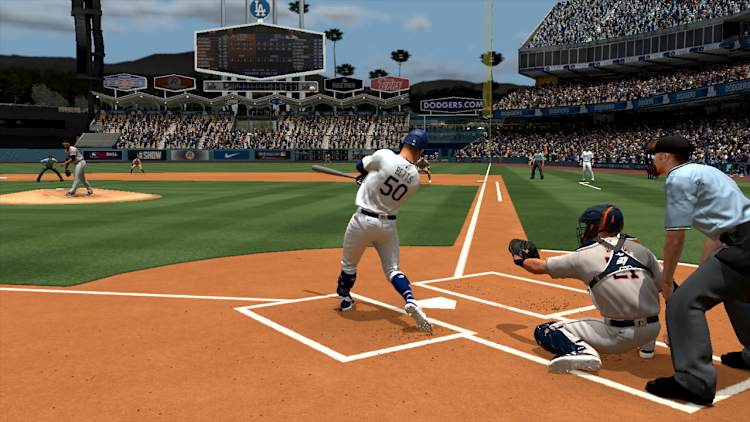
The visual presentation in the latest installment demonstrates how far sports games have come. Stadium environments feel vibrant and alive, with detailed crowd reactions and dynamic lighting that changes depending on the time of day.
Each stadium carries its own personality. The unique architecture, outfield dimensions, and surrounding scenery help recreate the feeling of playing in different ballparks. Evening games under bright stadium lights look dramatically different from afternoon matches played under clear skies.
Player models have also received noticeable improvements. Facial details, uniforms, and equipment appear more authentic, adding to the sense that players are watching real athletes compete. Even small details such as batting gloves, helmet reflections, and jersey movement help create a believable environment.
The broadcast-style presentation further enhances immersion. Camera angles shift naturally between pitches, fielding plays, and crowd reactions. Commentary provides context for important moments, discussing player performance and game situations in a way that resembles a real television broadcast.
All of these elements combine to make the game feel like more than just a simulation. It feels like stepping into a live baseball event.
Gameplay Depth in MLB The Show 25
Beyond visual polish, the real strength of MLB The Show 25 lies in its gameplay depth. Players are not limited to quick exhibition matches. Instead, the game offers multiple modes designed to appeal to different types of players.
Some fans enjoy building teams and managing long-term strategies, while others prefer the excitement of playing individual games. The variety of modes ensures that each player can approach the experience in their own way.
Franchise Mode: Building a Baseball Legacy
Franchise mode remains one of the most detailed parts of the game. Players take control of an entire organization, managing everything from lineups and pitching rotations to trades and player development.
Success requires long-term planning. A team might rely on veteran stars in the short term while nurturing young prospects who could become future leaders. Deciding when to promote a minor league player or trade for experienced talent adds a strategic layer beyond the field.
The simulation elements allow players to experience multiple seasons, tracking statistics and achievements across years of gameplay. Over time, a franchise can evolve into a powerhouse built through smart decisions and careful roster management.
Road to the Show: A Personal Journey
Another beloved mode focuses on a single player’s career. Instead of controlling an entire team, players guide one athlete from the early stages of their career all the way to potential stardom.
The journey begins with humble beginnings in the minor leagues. Players must perform well to earn promotions and eventually reach the highest level of competition.
As the character develops, skill points and training sessions allow for growth in different areas such as power hitting, speed, or defensive ability. This creates a personalized experience where each career unfolds differently depending on the player’s choices and performance.
Because the mode focuses on one athlete, every at-bat and defensive play carries personal significance. Achievements feel earned, and setbacks motivate players to improve.
Diamond Dynasty and Team Building
For those who enjoy collecting players and building custom rosters, the team-building mode offers a dynamic experience. Players gather cards representing current stars, legends, and rising talents.
Constructing a balanced lineup requires attention to strengths and weaknesses. A powerful batting order might dominate offensively but struggle on defense. A team built around pitching and fielding might rely on smaller offensive contributions.
Matches against other players test the effectiveness of these strategies. Each game becomes a contest of skill, preparation, and adaptability.
This mode has become a favorite among competitive players because it combines strategic team management with on-field performance.
Audio and Commentary Improvements
Audio design plays an important role in creating an immersive atmosphere. The sounds of the bat making contact with the ball, the roar of the crowd during a home run, and the subtle noise of cleats on dirt all contribute to the realism.
Commentary teams discuss ongoing situations, referencing player statistics and recent performances. When a pitcher throws several strikes in a row or a batter continues a hitting streak, the commentary reflects those developments.
This dynamic commentary ensures that games feel unique rather than repetitive.
Realism and Authentic Baseball Strategy
One of the defining characteristics of the series has always been its commitment to realism. Baseball is a sport built on patience and strategy rather than constant action, and the game respects that rhythm.
Managers must decide when to bring in relief pitchers, attempt stolen bases, or shift defensive positions. These decisions can dramatically influence the outcome of a game.
Weather conditions and stadium dimensions also affect gameplay. A fly ball that might become a home run in one stadium could turn into a routine out in another with deeper fences.
Because of these factors, players must adapt their strategies rather than relying on the same approach in every game.
Community and Competitive Play
Modern sports games thrive on active communities, and the baseball gaming community has grown steadily over the years.
Competitive players often organize tournaments and leagues where participants test their skills against each other. These competitions highlight how deeply strategic the gameplay systems can be.
Online matchmaking allows players to challenge opponents from around the world. Each match introduces new play styles and strategies, keeping the experience fresh.
The sense of community extends beyond the game itself. Fans discuss roster strategies, share gameplay tips, and celebrate memorable moments together.
Accessibility and Learning Curve
While the game offers deep mechanics, it also includes systems designed to help newcomers learn the fundamentals.
Tutorials guide players through the basics of pitching, hitting, and fielding. Adjustable difficulty levels allow beginners to practice without feeling overwhelmed.
At the same time, advanced players can increase the challenge by using more precise control systems. This flexibility ensures that the game remains welcoming while still rewarding mastery.
The learning curve reflects the nature of baseball itself. At first, mechanics may feel complex, but with practice, they become second nature.
Why Baseball Games Continue to Matter
Sports games serve a unique role in gaming culture. They allow fans to connect with their favorite sport in an interactive way, experiencing moments that might otherwise remain distant.
For baseball fans, stepping onto a digital field offers the chance to recreate famous matchups, experiment with strategies, and imagine alternative outcomes. A player can guide a struggling team to a championship or relive historic rivalries.
The enduring popularity of baseball video games shows how powerful this connection can be. Each new release carries the responsibility of honoring that tradition while introducing meaningful improvements.
The Future of the Series
As technology continues to evolve, the potential for sports simulations grows. Improved hardware allows for more detailed stadiums, smarter artificial intelligence, and more realistic player animations.
Future installments may expand even further into dynamic storytelling, enhanced online leagues, and deeper career progression systems.
The continued success of MLB The Show 25 demonstrates that fans remain eager for authentic baseball experiences. By building upon its strengths and listening to player feedback, the series is well positioned to remain a leader in sports gaming for years to come.
Conclusion
Baseball is often described as a game of moments. A single swing can change the outcome of an entire match, and a single play can become part of sports history. Capturing that tension and excitement in a video game is no easy task.
MLB The Show 25 succeeds because it understands what makes baseball special. It focuses on authenticity, strategic depth, and immersive presentation rather than flashy gimmicks.
Through refined gameplay mechanics, detailed stadium environments, and a wide range of modes, the game offers something for every type of player. Whether someone wants to build a championship franchise, guide a rising star to greatness, or simply enjoy a competitive match with friends, the experience delivers.
For longtime fans of the series and newcomers alike, this installment stands as a strong example of how sports games can evolve while staying true to their roots.