
In recent years, role-playing games have leaned heavily into either sprawling open worlds or nostalgic throwbacks. Few attempt to blend classical artistry with modern mechanical ambition. Clair Obscur Expedition 33 steps into that space with confidence. It presents a world that feels painterly and tragic, but also urgent and alive.
From its first reveal, the game stood out for its striking visual direction and a premise built around inevitability. A mysterious Paintress marks a number each year. When she paints it, everyone of that age dies. The number is now 33. An expedition forms to end this cycle before it is too late. That stark setup gives the game an emotional core rarely seen in big-budget RPGs.
What follows is not just a battle against an external force, but a confrontation with mortality itself.
The World of Clair Obscur Expedition 33
The setting of clair obscur expedition 33 feels as though it was pulled from a canvas steeped in romanticism and decay. The term “clair-obscur,” borrowed from art history, refers to strong contrasts between light and shadow. That idea defines the game’s atmosphere. Beauty and dread coexist in every frame.
The architecture draws inspiration from Belle Époque France, yet it is twisted by surreal distortions. Streets curve unnaturally. Statues appear half-finished. Vast landscapes stretch beyond the horizon like incomplete brushstrokes. This is a world both refined and broken.
The visual style supports the narrative tension. Light is often warm and golden, but shadows swallow entire districts. The world feels suspended in time, as though everyone knows the countdown cannot be stopped.
A Premise Built on Inevitability
The core narrative device is simple but devastating. Each year, the Paintress lowers the number by one. Anyone who reaches that age vanishes. This is not rumor. It is accepted truth. Societies reorganize themselves around it.
People plan their lives with a ceiling in mind. Families count down birthdays like ticking clocks. The announcement that the number is now 33 creates immediate urgency for those at that threshold. The expedition is not symbolic. It is desperate.
This concept elevates the story beyond standard heroism. The characters are not chasing glory. They are racing against erasure.
Themes of Mortality and Meaning
Few RPGs tackle the idea of predetermined death so directly. Here, the question is not whether death exists, but whether it can be challenged. The tension between acceptance and rebellion drives character motivations.
Some believe the cycle is sacred. Others see it as a curse. The expedition represents defiance. Yet the emotional weight remains complex. If everyone has lived under this system for generations, what does change mean? Can hope survive in a world shaped by loss?
These questions give the narrative gravity. They are not decorative themes. They shape the choices players will make.

Combat That Blends Strategy and Action
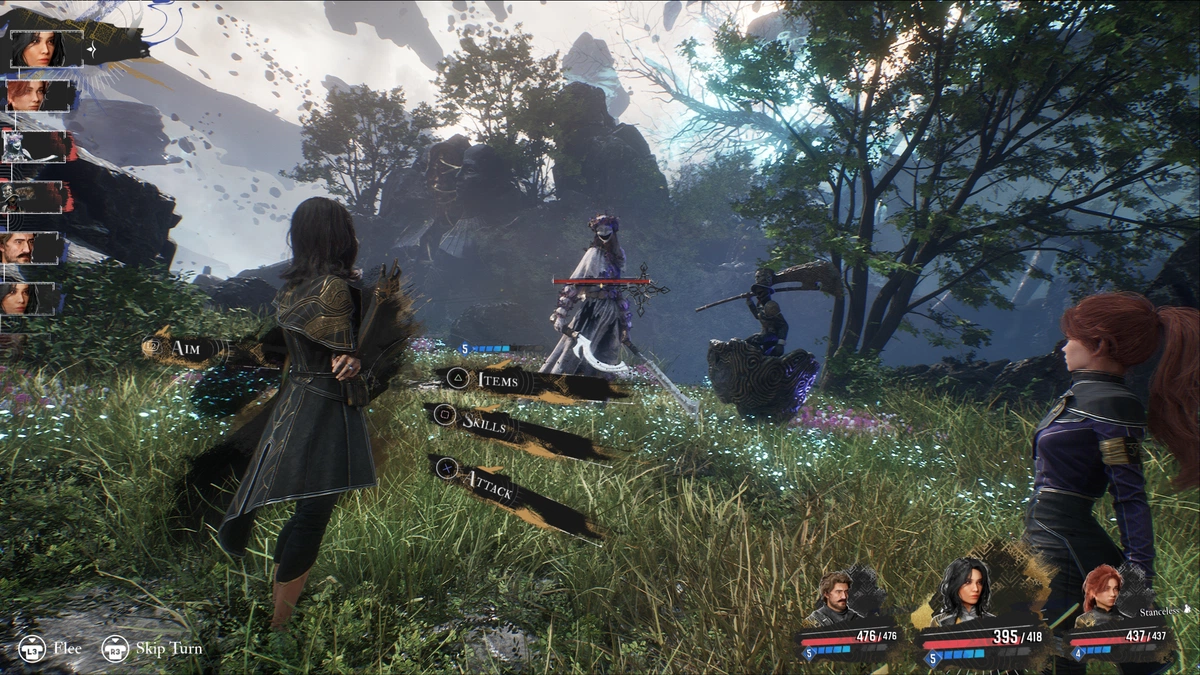
One of the most talked-about aspects of clair obscur expedition 33 is its combat system. It merges turn-based structure with real-time elements. This hybrid approach respects classic RPG strategy while adding kinetic tension.
During battles, players issue commands in turns. However, attacks require timed inputs to maximize effectiveness. Defensive maneuvers demand active engagement. Dodges and parries are not passive stats. They are player-driven actions.
This design keeps combat from feeling static. Every encounter demands attention. Timing becomes as important as planning.
Character Abilities and Synergy
The expedition members each bring distinct skills. Some specialize in elemental manipulation. Others lean into close-range aggression or support techniques. Building a balanced party is not just advisable, it is necessary.
Abilities can interact in layered ways. A debuff applied by one character may amplify another’s attack. Status effects stack strategically. Players are encouraged to experiment rather than repeat the same pattern.
Progression systems deepen this layer. Skill trees allow customization without overwhelming complexity. Instead of endless grinding, advancement feels deliberate.
Boss Encounters as Narrative Milestones
Major battles serve as more than mechanical challenges. They are narrative turning points. Bosses often represent aspects of the world’s corruption or fragments of its history.
These encounters are cinematic, yet they retain mechanical depth. Learning patterns, mastering timing, and adjusting strategy become essential. Victory feels earned rather than scripted.
Artistic Identity and Audio Design
The artistic direction is central to the experience. The environments resemble living paintings, with textures that appear brushed rather than rendered. Characters move fluidly against these stylized backdrops.
Color theory plays a significant role. Warm golds and cool blues clash in moments of tension. Red is used sparingly, often signaling emotional rupture or danger.
Sound design reinforces this atmosphere. The musical score leans into orchestral arrangements, with subtle French influences. Strings swell during dramatic sequences. Softer piano motifs underscore reflective scenes.
Ambient audio also matters. Wind carries distant echoes. Footsteps resonate in hollow corridors. Silence is used carefully, creating anticipation before climactic moments.
Together, these elements build immersion without overwhelming the player.
A New Studio with Big Ambitions
The game is being developed by Sandfall Interactive, a studio formed by developers who previously worked on major RPG franchises. Their ambition is clear: create a narrative-driven experience that feels handcrafted.
The project is also supported by Kepler Interactive, known for backing distinctive titles rather than purely commercial formulas. This partnership allows creative risks to flourish.
For a debut project, the scale is impressive. Yet the focus remains tight. The story is character-centered, not bloated with unnecessary diversions.
Character Writing That Feels Personal
Strong worldbuilding means little without compelling characters. The members of the expedition are defined by their proximity to the cursed age. Some are already 33. Others are younger but know their turn will come.
Dialogue reflects exhaustion, fear, and stubborn hope. Conversations feel grounded rather than melodramatic. Characters argue, doubt, and reflect.
Backstories unfold gradually. Instead of dumping exposition, the game reveals motivations through interactions and environmental storytelling. This restraint builds authenticity.
Relationships within the group evolve as stakes rise. Trust is earned through shared hardship. Loss carries consequences. The emotional arc is as important as the quest itself.
Technical Presentation and Performance
Visually, the game leverages modern hardware to achieve high-fidelity lighting and texture work. Real-time reflections and volumetric effects enhance the painterly style without losing clarity.
Performance stability is crucial for a system that blends turn-based planning with action inputs. Smooth frame rates ensure that parries and timed attacks feel responsive. Controls are designed to be intuitive, lowering the barrier for newcomers.
Accessibility options are also present, allowing players to adjust difficulty or timing windows. This ensures that the experience remains inclusive without compromising design integrity.
Market Context and Anticipation
In an era dominated by massive open-world titles and live-service models, this game takes a different route. It prioritizes narrative cohesion and artistic identity.
The early reveal generated strong reactions due to its distinctive tone. Players drawn to emotionally rich RPGs see it as a refreshing alternative. It is not chasing trends. It is carving its own lane.
Comparisons to classic Japanese RPGs are common, particularly in combat structure. Yet the aesthetic and narrative direction remain uniquely European.
The anticipation surrounding the release reflects a hunger for focused storytelling. Players want experiences that linger after the credits roll.
The Philosophy Behind the Title
The name itself signals intent. “Clair obscur” refers to the interplay of light and shadow. Expedition 33 references the age at the heart of the crisis. Together, they frame the game’s core tension.
Light represents hope, art, and resilience. Shadow symbolizes inevitability and loss. The expedition stands at that boundary.
This philosophical framing shapes every design choice. Visual contrast mirrors moral contrast. Combat urgency mirrors narrative urgency. The mechanics and story are aligned.
Emotional Stakes That Drive Engagement
What truly sets the experience apart is its emotional clarity. The stakes are deeply personal. This is not about saving a kingdom in abstract terms. It is about survival at a specific age, in a specific year.
Every birthday becomes significant. Every relationship carries weight. The concept resonates because it reflects real human anxieties about time and mortality.
As players guide the expedition forward, they are constantly reminded of the ticking number. The countdown is invisible, yet ever present.
Looking Ahead
As release approaches, expectations remain high. The promise of a focused, emotionally driven RPG has captured attention. If execution matches ambition, the title could stand as one of the most memorable narrative experiences of its generation.
The blend of classical artistry and modern combat design positions it uniquely in the current market. It does not rely on nostalgia alone. It builds something new from familiar foundations.
Conclusion
At its heart, clair obscur expedition 33 is a meditation on light and shadow, hope and inevitability. It challenges players to confront mortality not as a distant concept, but as an immediate reality.
Through painterly visuals, hybrid combat, and character-driven storytelling, the game crafts an experience that feels intimate and grand at the same time. It refuses to dilute its themes for easy spectacle.
If it fulfills its vision, it will not simply be remembered for its mechanics or graphics. It will be remembered for how it made players feel. In a medium often driven by scale, that emotional focus may be its greatest strength.
Read more :Kirby Star Allies: A Warm, Colorful Adventure Built on Friendship