

When people talk about iconic video games that redefined what the medium could be, SimCity is inevitably part of that conversation. This groundbreaking simulation franchise didn’t just launch a successful series; it helped invent an entire genre of city-building and urban management games that remains influential decades after its debut. From its origins as a quirky idea to its lasting legacy in both gaming and real-world education, SimCity stands as one of the most meaningful and enduring titles in interactive entertainment history.
In this article, we’ll explore what makes SimCity so unique, how it evolved over time, and why its impact still resonates with players and creators alike. Whether you’re a longtime fan, a curious newcomer, or someone interested in urban planning, the story of SimCity reveals how a game can be much more than a pastime — it can be a powerful tool for learning, creativity, and strategic thinking.
What Is SimCity and Why It Matters
The Core Concept Behind SimCity
At its heart, SimCity is a city-building simulation that places players in the role of “mayor” — responsible for designing and managing an entire city from scratch. Unlike many traditional video games that offer a clear win/lose structure, SimCity encourages open-ended play. There are no fixed objectives or final victories; instead, players make continuous decisions to help their city grow and prosper.
From zoning residential, commercial, and industrial areas to building infrastructure like power plants, roads, and transportation systems, every choice affects how the city develops. Players must balance economic demands, population growth, environmental concerns, and public services. A sudden disaster can knock everything off track, forcing quick thinking and long-term strategy.
What sets SimCity apart is its emphasis on systems and consequences. Every action triggers feedback loops that ripple through the city’s development. For example, failing to provide adequate utilities can stunt growth, while poorly planned road layouts can lead to traffic congestion and unhappy citizens.
This complexity made SimCity much more than a simple game. It was a simulation that invited players to experiment, learn from mistakes, and consider the real-world implications of urban planning. Educational institutions even began using the game to teach concepts like resource allocation and critical thinking, showing that games could be valuable learning tools.

The Origins of a Classic
How SimCity Began
The history of SimCity began with designer Will Wright, whose fascination with simulation games led him to create something radically different from the action or arcade titles that dominated the 1980s. Inspired by the terrain editor tool in the game Raid on Bungeling Bay, Wright began developing a project focused not on combat or goals, but on creation and management.
Released in 1989 by Maxis, SimCity dropped players into a world where they could build and manage a virtual city. It wasn’t an immediate commercial success, but positive reviews and word-of-mouth soon boosted its popularity, establishing it as a beloved title on personal computers.
The original game featured two-dimensional graphics and an overhead perspective, and it placed high value on creative problem-solving rather than predefined challenges. Early critics praised its depth and originality, even though it lacked the action and competitive elements that many expected from video games at the time.
Over time, SimCity grew into a respected franchise that expanded the boundaries of what video games could simulate. Its open-ended design and focus on strategic planning helped inspire gamers and developers to think differently about how software could educate and entertain.
Innovation Without Traditional Win Conditions
One of the most important innovations of SimCity was its resistance to standard win/lose scenarios common in games. Instead of completing levels or defeating enemies, players shaped their cities in any direction they chose. This open-ended structure gave players freedom to experiment, explore, and observe how systems interacted over time.
This approach was revolutionary because it allowed players to treat the game like a sandbox — a safe space to test ideas and learn from outcomes. Many players found themselves asking questions like “What happens if I lower taxes?” or “How do I reduce pollution while increasing growth?” These types of strategic considerations turned SimCity into an experience that felt more like managing a complex ecosystem than playing a traditional game.
The Legacy of SimCity
Influence on the Gaming World
The success of SimCity didn’t just spawn sequels; it inspired an entire subgenre of city-building and simulation games. The influence of SimCity is visible in titles like Cities: Skylines and SimTower, as well as in a range of other simulation and management games that echo its fundamental principles.
By pioneering an open-ended, systems-based approach to gameplay, SimCity showed developers that players were hungry for meaningful choices and long-term challenges. Its success helped legitimize genres that focus on planning, resource management, and emergent storytelling. The ripple effects of its design philosophy can still be seen in many modern games.
Real-World Impact and Education
Beyond entertainment, SimCity has found a place in education and professional environments. Urban planners, architects, and even government officials often cite the game as an early influence on their careers. Its complex simulation of city dynamics offers lessons about economics, infrastructure, and public policy that resonate beyond the screen.
Research has also explored how playing SimCity can contribute to the development of critical thinking skills in students. By requiring players to analyze trade-offs, interpret data, and make decisions with wide-ranging consequences, the game encourages a mindset that translates well to real-world problem-solving.
This educational potential helped distinguish SimCity from many games of its era, positioning it not just as entertainment, but as a creative tool for learning and exploration.
How SimCity Has Evolved
Sequels and Spin-Offs
Over the years, the SimCity franchise expanded with multiple sequels, each introducing new mechanics and greater complexities. Titles like SimCity 2000 and SimCity 4 added features such as waste management, agriculture, and intercity relations, making the simulation deeper and more comprehensive.
These later games also embraced community creativity, with players sharing decorative layouts, custom maps, and design strategies that extended the lifespan of each title.
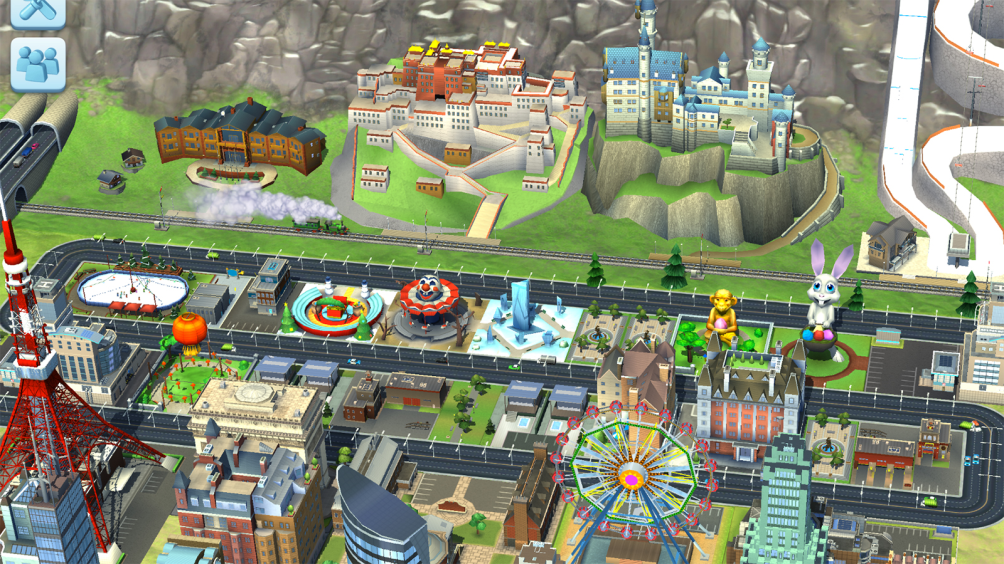
In the mobile era, SimCity: BuildIt offered a version of the city-building experience designed for smartphones and tablets. This version blended core elements of the franchise with a more casual, accessible style and became one of the most played games in the series, with millions of downloads worldwide.
The Challenges of Modern Reboots
The franchise faced challenges with attempts to modernize the series for new audiences. For example, the 2013 SimCity reboot introduced online-only requirements and faced criticism over server issues and limitations on buildable city sizes. Although intended to update the classic experience, these design choices were controversial among longtime fans.
Despite these setbacks, the legacy of SimCity remains strong. The ideas it introduced — particularly around simulation, open-ended play, and urban management — continue to shape how developers design complex games and how players engage with them.
Why SimCity Continues to Captivate
The Joy of Creation and Planning
What sets SimCity apart from many other types of games is its ability to make players feel like architects and decision-makers. Building a thriving city from a blank map can be incredibly satisfying. Each new neighborhood, transit system, or power grid feels like a step toward realizing a vision that belongs uniquely to the player.
This creative agency is central to the franchise’s enduring appeal. Whether you’re experimenting with zoning strategies to reduce traffic or balancing taxes to keep citizens happy, the game offers deep strategic engagement that feels both rewarding and intellectually stimulating.
Endless Possibilities and Replayability
Because SimCity lacks rigid objectives or a single narrative, each playthrough becomes its own story. Some players aim to build towering metropolises, while others focus on sustainability, aesthetics, or efficient transport networks. No two cities are ever the same, and that freedom is part of what makes the game endlessly replayable.
This open structure encourages players to think not just about short-term gains, but long-term planning. Managing competing needs — such as balancing growth with environmental impact or public services with budget constraints — invites thoughtful experimentation and strategy.
Conclusion
SimCity is more than a video game; it is a milestone in interactive design that helped redefine what games could teach and how they could engage players. From its humble beginnings as a simulation toy crafted by Will Wright to its lasting influence on modern gaming and real-world thinkers, the franchise has carved out a unique place in both culture and education.
Its lasting legacy is rooted in open-ended creativity, strategic depth, and the joy of building something meaningful. Whether you are zoning your first residential district or managing a sprawling megacity, the core experience of SimCity — imagining a world and shaping it through thoughtful decisions — remains as rich and compelling as ever.
The impact of SimCity extends far beyond entertainment. It celebrates imagination, rewards planning, and invites players to explore the fascinating complexity of cities, systems, and communities. For countless players around the world, this beloved franchise hasn’t just been a game — it’s been a way to think, learn, and discover the inner workings of the world around us.
FAQs
What platforms can you play SimCity on?
SimCity has appeared on many platforms over the years, from classic personal computers to mobile devices. The original versions were played on PC systems, while the franchise later expanded to Macintosh and mobile platforms like Android and iOS with titles such as SimCity: BuildIt, a mobile version that retains city-building elements in a free-to-play format.
How do you start building your first city in SimCity?
In most SimCity games, you begin with an empty map and use tools to zone residential, commercial, and industrial areas, build infrastructure like power plants and roads, and manage utilities. Citizens (“Sims”) will move into zones as long as their needs for jobs, services, and utilities are met.
Can you trade or share resources between cities?
In some modern SimCity versions, cities within a region can connect and share resources such as utilities or collaborate on regional projects. This aspect adds a layer of strategic planning beyond building a single city alone.
Why do Sims sometimes refuse to work or move into buildings?
If Sims won’t move into buildings or go to work, it’s often due to imbalances in services, lack of jobs, or insufficient infrastructure. Adjusting zoning, increasing services like schools or utilities, and fixing transportation can help resolve these issues.
Are there guides available for beginners?
Yes, many community tutorials and guides exist that explain early game mechanics, zoning strategies, traffic planning, and other city-building basics. These resources help new players understand how to develop stable and successful cities.
Also read:Astro Bot Clicker: A Deep Dive Into the Joy of Idle Exploration