
In an era where video games increasingly blur the boundaries between storytelling, philosophy, and interactive art, Pragmata stands out as an ambitious and enigmatic project. It is not simply another science-fiction title chasing spectacle. Instead, it presents a thoughtful meditation on isolation, trust, and the uneasy coexistence of humans and advanced technology. Through its mysterious imagery and restrained narrative hints, the game has sparked curiosity and debate long before players have been able to fully experience its world.
This article explores the creative foundations, thematic depth, and cultural relevance of this unusual project, examining why it continues to captivate attention and what it may represent for the future of narrative-driven games.
The Origins of an Unconventional Vision
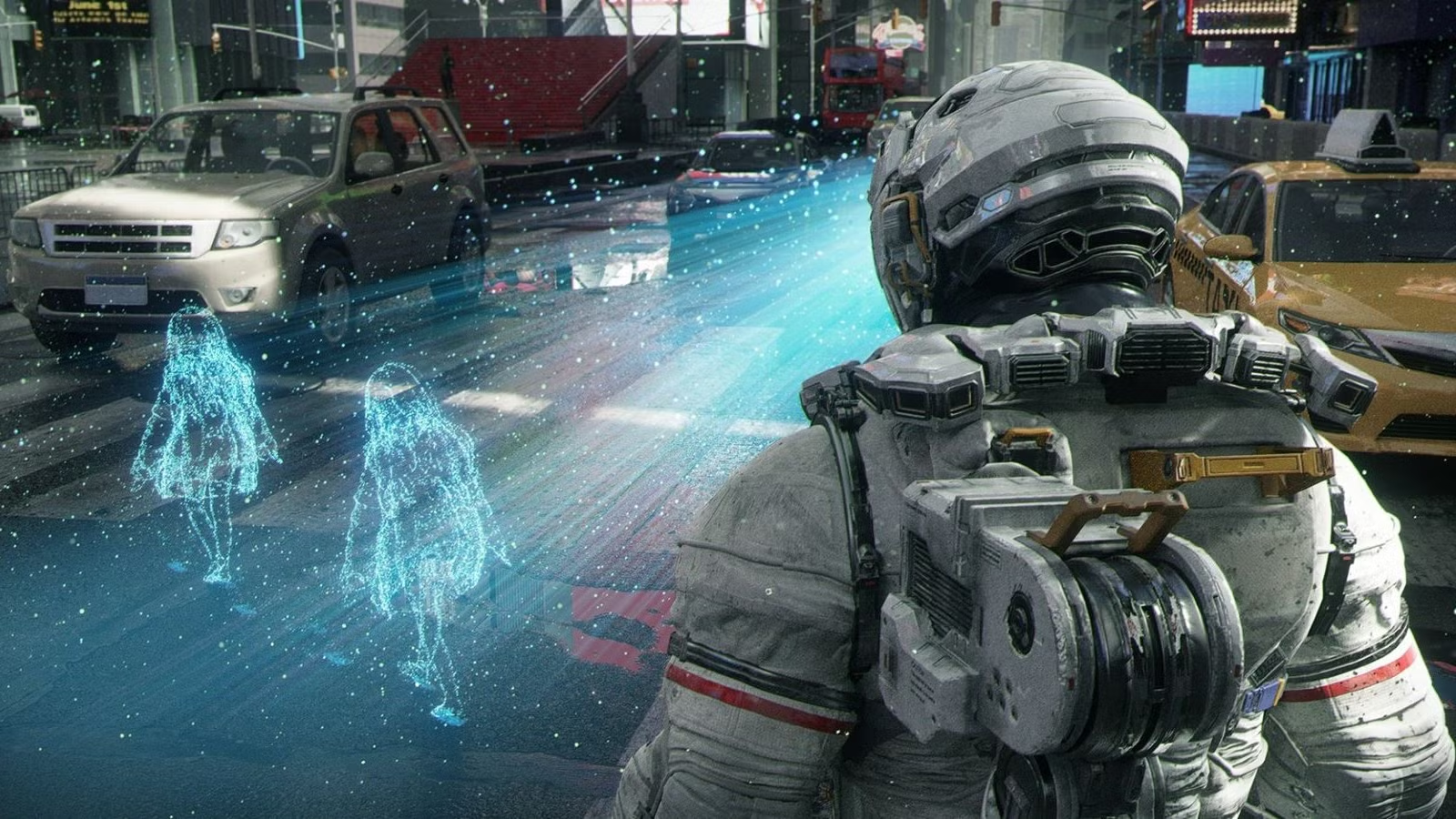
The first impression of the game was deliberately cryptic. Rather than overwhelming audiences with exposition, its reveal relied on mood, silence, and unanswered questions. A lonely astronaut, a young girl with strikingly calm intelligence, and a desolate lunar city formed the emotional core of its initial presentation. From the start, it was clear that the developers aimed to provoke thought rather than provide easy answers.
Behind the scenes, the creative team approached the project as an experiment in restraint. They sought to craft a story that unfolds gradually, allowing players to interpret events rather than being guided by explicit narration. This design philosophy reflects a growing confidence in players’ ability to engage with complex themes without constant explanation.
At its heart, the project was conceived as a response to a world increasingly shaped by artificial intelligence, automation, and digital mediation. Instead of presenting these elements as pure threats or miracles, the game frames them as extensions of human intention, shaped by the same flaws and hopes as their creators.
Pragmata as a Meditation on Isolation and Connection
Pragmata and the Quiet Loneliness of Progress
The setting plays a crucial role in conveying the game’s emotional tone. A futuristic lunar environment, stripped of crowds and noise, becomes a canvas for introspection. Vast empty spaces emphasize how far humanity has traveled, not only physically but emotionally. Technological achievement is undeniable, yet it comes with a haunting sense of solitude.
This atmosphere invites players to reflect on modern life, where constant connectivity often masks deeper feelings of disconnection. The absence of bustling cities or familiar social structures is not merely aesthetic. It reinforces the idea that progress, when pursued without reflection, can leave individuals adrift in environments that feel impressive but emotionally hollow.
The companionship between the adult protagonist and the young girl offers a counterbalance to this emptiness. Their relationship suggests that meaning is not found in technology itself but in how people choose to care for one another within technological systems.
Narrative Ambiguity and Player Interpretation
One of the most striking creative choices is the deliberate lack of clear exposition. Rather than explaining the nature of the world, the story encourages players to observe, infer, and question. Small gestures, environmental details, and fragments of dialogue carry significant narrative weight.
This approach mirrors techniques often found in literary science fiction, where ambiguity invites deeper engagement. By resisting the urge to clarify every mystery, the game fosters a sense of discovery that feels personal and earned. Each player may walk away with a slightly different understanding of events, shaped by their own perspectives and experiences.
Such narrative openness also enhances replay value. Subtle details that may seem insignificant at first can gain new meaning when revisited, encouraging players to reconsider their assumptions about characters and motivations.
Themes of Artificial Intelligence and Trust
Artificial intelligence is not presented as a monolithic antagonist or benevolent force. Instead, it appears as a complex presence woven into everyday existence. The young girl, whose abilities hint at a synthetic origin, embodies this complexity. She is both emotionally expressive and intellectually advanced, challenging simplistic distinctions between human and machine.
Trust becomes a central theme. The adult protagonist must rely on the girl’s guidance and capabilities, even when their origins remain unclear. This dynamic reflects broader societal questions about how much autonomy and authority humans are willing to grant intelligent systems.
By framing AI as a partner rather than a tool, the game invites reflection on responsibility. If machines can think, learn, and adapt, then ethical considerations extend beyond functionality to relationships and mutual dependence.

Gameplay as Storytelling
Rather than separating gameplay from narrative, the design integrates them seamlessly. Actions taken by the player reinforce thematic ideas, turning mechanics into metaphors. Cooperation between characters is not just a plot device but a functional necessity.
Puzzles and traversal elements emphasize coordination and trust. Progress often depends on understanding the strengths and limitations of each character, reinforcing the idea that advancement requires collaboration rather than dominance. This design choice subtly challenges traditional power fantasies common in action-oriented games.
Combat, when present, is expected to serve a similar narrative function. Instead of glorifying destruction, it is likely framed as a means of survival within a fragile environment. Such restraint aligns with the game’s overall tone, prioritizing meaning over spectacle.
Artistic Direction and Emotional Resonance
Visually, the game blends realism with abstraction. Detailed character models contrast with stark, minimalist environments, creating a sense of scale and vulnerability. Lighting plays a critical role, using shadows and muted colors to evoke melancholy and introspection.
Sound design further enhances immersion. Moments of silence are as important as music, allowing players to feel the weight of isolation. When music does appear, it is subtle and emotive, underscoring key moments without overwhelming them.
This careful balance of visual and auditory elements demonstrates a commitment to emotional authenticity. Rather than manipulating feelings through constant stimulation, the game trusts players to engage with quieter, more reflective moments.
Cultural Context and Contemporary Relevance
The themes explored resonate strongly with current global concerns. As societies grapple with rapid technological change, questions about identity, agency, and connection have become increasingly urgent. The game’s portrayal of a future shaped by innovation yet marked by loneliness feels particularly timely.
By focusing on individual relationships rather than grand political conflicts, the narrative humanizes abstract debates about technology. It reminds players that behind every algorithm and machine are human intentions, fears, and desires.
This focus on intimacy sets the project apart from many science-fiction narratives that prioritize масштаб and conflict. Instead, it suggests that the most profound consequences of technological progress are often personal and emotional.
Pragmata and the Evolution of Narrative Games
In the broader landscape of interactive storytelling, Pragmata represents a continued shift toward subtlety and thematic depth. It aligns with a growing body of games that treat players not as passive consumers but as active interpreters.
By embracing ambiguity and emotional nuance, it challenges assumptions about what mainstream games can achieve. It demonstrates that commercial projects can engage with philosophical ideas without sacrificing accessibility or engagement.
This approach may influence future developers to take creative risks, trusting audiences to appreciate complexity. As the medium matures, such projects help expand the definition of what a video game can be.
Anticipation, Delays, and Creative Patience
The development journey has been marked by extended timelines, reflecting the challenges of realizing such an ambitious vision. Rather than rushing to meet expectations, the team appears committed to refining the experience until it aligns with their original intent.
While delays can test patience, they also signal a respect for quality and coherence. In an industry often driven by tight schedules, this willingness to wait underscores the importance of creative integrity.
For players, anticipation becomes part of the experience. The mystery surrounding the project encourages speculation and discussion, keeping its themes alive even in the absence of new information.
The Emotional Core of Pragmata
At its center, Pragmata is less about technology itself and more about the human response to it. The bond between characters serves as an emotional anchor, grounding abstract ideas in relatable experiences. Care, curiosity, and vulnerability drive the narrative forward.
This focus on emotional truth ensures that the story resonates beyond its futuristic setting. Players are invited to reflect on their own relationships with technology and with one another, drawing parallels between the game’s world and their own lives.
By prioritizing empathy over exposition, the narrative achieves a rare intimacy. It suggests that even in the most advanced futures, fundamental human needs remain unchanged.
Looking Ahead with Measured Hope
As the industry continues to evolve, projects like Pragmata offer a glimpse of a more thoughtful direction. They show that innovation does not require constant escalation but can emerge from quiet reflection and meaningful design choices.
The game’s willingness to ask questions rather than provide answers may be its greatest strength. It encourages players to think critically, to feel deeply, and to engage with technology not as a spectacle but as a mirror of human values.
In the end, Pragmata stands as a reminder that progress is not defined solely by how far humanity can go, but by how carefully it chooses to move forward.
FAQs
Where is Pragmata set?
The game is set in a futuristic lunar city, characterized by vast empty spaces and a sense of isolation. This setting reinforces the game’s themes of loneliness, progress, and reflection.
Is Pragmata suitable for players who enjoy slow-paced games?
Absolutely. Players who appreciate atmospheric storytelling, exploration, and emotional narratives will likely enjoy the slower, more deliberate pacing of the game.
Why has Pragmata generated so much anticipation?
The game has attracted attention due to its mysterious presentation, striking visuals, and ambitious themes. Limited information and development updates have also fueled curiosity and discussion among players.
Does Pragmata aim to deliver a clear story ending?
Rather than offering straightforward answers, the game is expected to leave room for interpretation. Its narrative approach encourages players to reflect on events and form their own understanding of the story.
When can players expect to experience Pragmata?
The game’s development has taken a careful, patient approach. While timelines have shifted, this suggests a focus on quality and creative vision rather than rushing the final experience.
Also read :XDefiant Game: How Ubisoft’s Fast-Paced Arena Shooter Is Redefining Competitive Multiplayer