

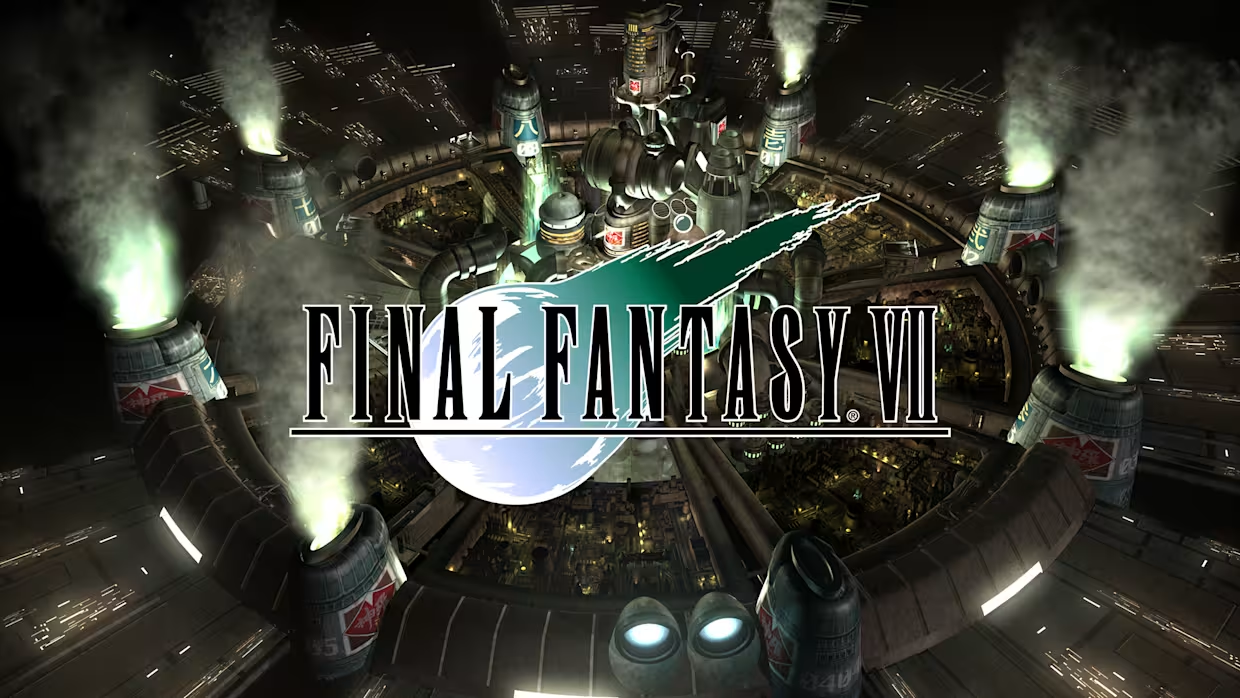
Few video games have left a mark as deep and lasting as this iconic title. Released at a moment when role-playing games were still finding their place in mainstream culture, it arrived with ambition, emotion, and a cinematic vision that reshaped expectations. It was not just another successful release; it became a turning point that influenced how stories were told, how characters were written, and how players emotionally connected with virtual worlds.
At a time when games were often seen as mechanical challenges or light entertainment, this experience dared to be reflective, tragic, and deeply human. It treated players as participants in a narrative rather than observers of a sequence of battles. Its impact still echoes through modern game design, storytelling, and even popular culture.
Final Fantasy VII and the Shift in Role-Playing Games
Before Final Fantasy VII entered the scene, role-playing games largely followed familiar patterns. Stories were usually straightforward, characters fit clear archetypes, and technical limitations restricted how much emotion could be conveyed. This title broke from those boundaries by presenting a layered narrative that trusted players to think, feel, and interpret events for themselves.
The shift was immediate. Suddenly, RPGs were no longer confined to niche audiences. They became vehicles for complex storytelling, moral questions, and cinematic presentation. Developers across the industry began to see that players were hungry for deeper experiences, not just longer ones.

A Leap Into Three-Dimensional Storytelling
One of the most striking changes was the move into 3D environments combined with pre-rendered backgrounds. This approach allowed scenes to feel more dynamic and expressive than anything that came before it. Camera angles, lighting, and movement were used deliberately to guide emotion, much like in film.
This visual leap was not about realism alone. It was about atmosphere. Dark cityscapes felt oppressive, quiet moments felt intimate, and large-scale events carried real weight. These design choices helped transform storytelling into something immersive rather than merely descriptive.
A World Built on Conflict and Identity
The setting introduced players to a planet struggling under the weight of industrial exploitation. Energy extraction, environmental decay, and corporate power were not abstract ideas but visible realities within the world. Cities towered above slums, prosperity existed alongside suffering, and progress came at a clear cost.
This grounded conflict made the world feel believable. It mirrored real-world concerns without becoming preachy, allowing players to draw their own conclusions. The sense that every location had history and consequence helped anchor the emotional journey that unfolded.
Environmental Themes With Emotional Weight
What set this narrative apart was how it personalized global issues. Environmental damage was not just a backdrop; it affected lives, homes, and futures. Players did not fight for abstract ideals but for people and places they had come to care about.
This approach showed that games could tackle serious themes while remaining engaging. It opened the door for future titles to explore social and philosophical ideas without sacrificing entertainment.
Characters Who Felt Uncomfortably Real
At the heart of the experience were characters defined by flaws, doubts, and personal struggles. The protagonist was not a flawless hero but someone wrestling with identity, memory, and purpose. Supporting characters carried their own emotional burdens, from guilt and grief to hope and quiet resilience.
This depth allowed players to see parts of themselves reflected on screen. Conversations felt natural, relationships evolved, and moments of silence carried as much meaning as dialogue. The emotional investment players felt was earned, not forced.
Loss, Growth, and Emotional Risk
One of the most defining aspects was its willingness to embrace loss. The story did not shield players from pain or undo its consequences. Instead, it treated emotional moments with seriousness and respect, trusting players to sit with their feelings rather than rushing past them.
This narrative courage changed expectations. It proved that games could deliver moments as powerful as those found in novels or films, sometimes even more so because of player involvement.
Gameplay That Served the Story
The battle system balanced strategy with accessibility, allowing newcomers and experienced players alike to engage deeply. Customization options encouraged experimentation, while progression felt tied to character growth rather than simple numerical increases.
Importantly, gameplay never felt disconnected from narrative intent. Battles reinforced the stakes of the story, and exploration supported world-building rather than distracting from it. This harmony between mechanics and narrative became a model for future RPGs.
Freedom Within Structure
Players were given meaningful choices in how they developed characters, approached combat, and explored the world. While the main narrative followed a clear path, these systems allowed each journey to feel personal.
This balance between guidance and freedom helped redefine player agency. It showed that strong storytelling and player choice could coexist rather than compete.
Cultural Impact Beyond the Screen
The influence of Final Fantasy VII extended far beyond its original release. It introduced millions of players to Japanese role-playing games and helped globalize the genre. Characters became cultural icons, music gained recognition beyond gaming circles, and discussions about narrative depth entered mainstream conversations.
Fan communities formed around shared experiences, theories, and emotional reactions. The game became a reference point, often cited when discussing storytelling excellence or emotional impact in interactive media.
Music as Emotional Memory
The soundtrack played a crucial role in shaping the experience. Themes were not just background elements but emotional anchors tied to characters and moments. Years later, a few notes are often enough to bring memories rushing back for players.
This demonstrated how sound design could deepen emotional engagement and leave a lasting imprint long after the console was turned off.
A Legacy That Continues to Evolve
As technology advanced, the influence of this landmark title did not fade. Developers continued to draw inspiration from its narrative structure, character development, and thematic ambition. It became a benchmark against which other RPGs were measured.
Modern reinterpretations and renewed interest introduced the story to new generations, proving that its core ideas remain relevant. While presentation styles may change, the emotional foundation remains intact.
Revisiting a Classic in a New Era
The renewed attention surrounding Final Fantasy VII highlighted the strength of its original vision. Rather than relying solely on nostalgia, modern adaptations focused on expanding characters and themes, respecting what made the story resonate in the first place.
This balance between honoring the past and embracing the present demonstrated the enduring power of thoughtful storytelling.
Why Its Influence Still Matters
Today, many of the features players take for granted in RPGs trace their roots back to this experience. Complex protagonists, morally layered stories, cinematic presentation, and emotionally driven narratives are now common expectations rather than rare exceptions.
The industry learned that players are willing to engage deeply when given stories that respect their intelligence and emotions. This lesson continues to shape how games are written and designed.
Conclusion
The legacy of Final Fantasy VII is not defined solely by sales numbers or technical achievements. It is defined by the way it made players feel, think, and remember. It challenged assumptions about what games could accomplish and proved that interactive storytelling could stand alongside other narrative art forms.
Decades later, its influence remains unmistakable. Not because it was perfect, but because it was bold, sincere, and unafraid to take emotional risks. In doing so, it changed role-playing games forever and left a standard that continues to inspire creators and players alike.
FAQs
Why is Final Fantasy VII considered so influential?
It introduced emotionally complex storytelling, cinematic presentation, and character depth that changed how role-playing games were designed and perceived worldwide.
How did the story differ from earlier role-playing games?
The narrative focused on identity, loss, and environmental conflict, moving beyond simple hero-versus-villain plots into more mature and layered themes.
What made the characters stand out to players?
Each character was written with personal struggles, flaws, and growth, allowing players to form strong emotional connections throughout the journey.
Did the game impact RPGs outside its own series?
Yes, many later RPGs adopted its approach to cinematic storytelling, music-driven emotion, and deeper character development.
Why does the game still resonate with new players today?
Its core themes, emotional moments, and thoughtful world-building remain relevant, making the experience meaningful even decades after its release.
Also read :Level Devil Unblocked: Mastering the Most Deceptive Platform Challenge