
When Thor God of War storms into God of War Ragnarök, he is more than a thunder-wielding foe. He is a conflicted deity torn between loyalty, grief, and his own violent legacy. His story is layered with tragedy and depth, offering one of the most powerful character portrayals in the series. This article explores his roots, his ties to Norse myth, his rivalry with Kratos, and the role he plays in shaping the destiny of Ragnarök.
A Thor Unlike Any Other
Thor has been part of human imagination for centuries. In Norse mythology, he is a hammer-wielding protector of gods and humans, known for his battles with giants and his role as a defender of Asgard. In modern pop culture, Marvel’s Thor is often portrayed as a noble and heroic figure, embodying charm and lighthearted bravery.
But in God of War Ragnarök, Thor God of War is entirely different. He is not the charming Avenger or even the purely mythic protector. Instead, he is brutal, imposing, and morally gray. He is less a savior and more a weapon, molded by his father Odin’s ambitions. His character is darker, rawer, and far more human — flawed, broken, and full of anger.
The Power and Presence of Thor God of War
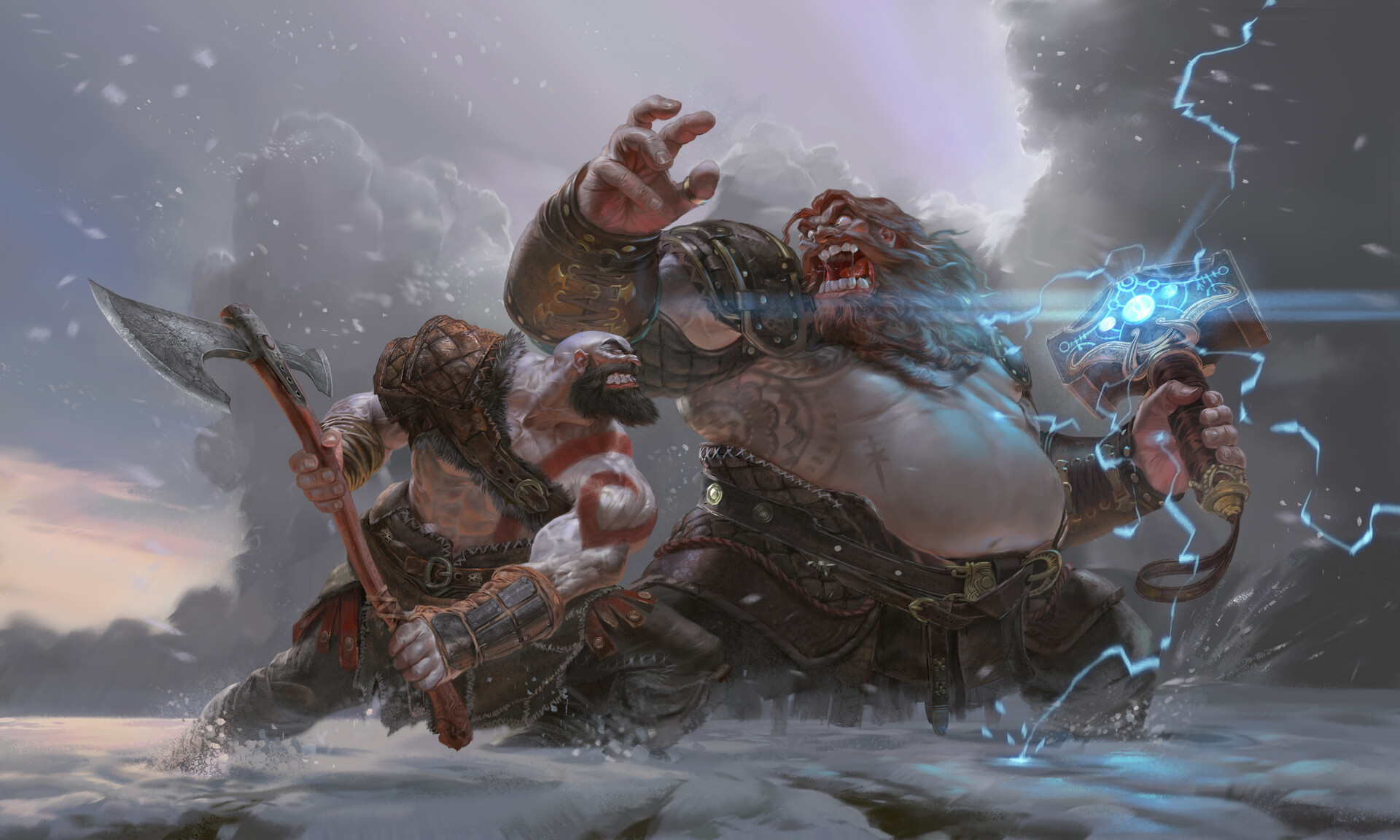
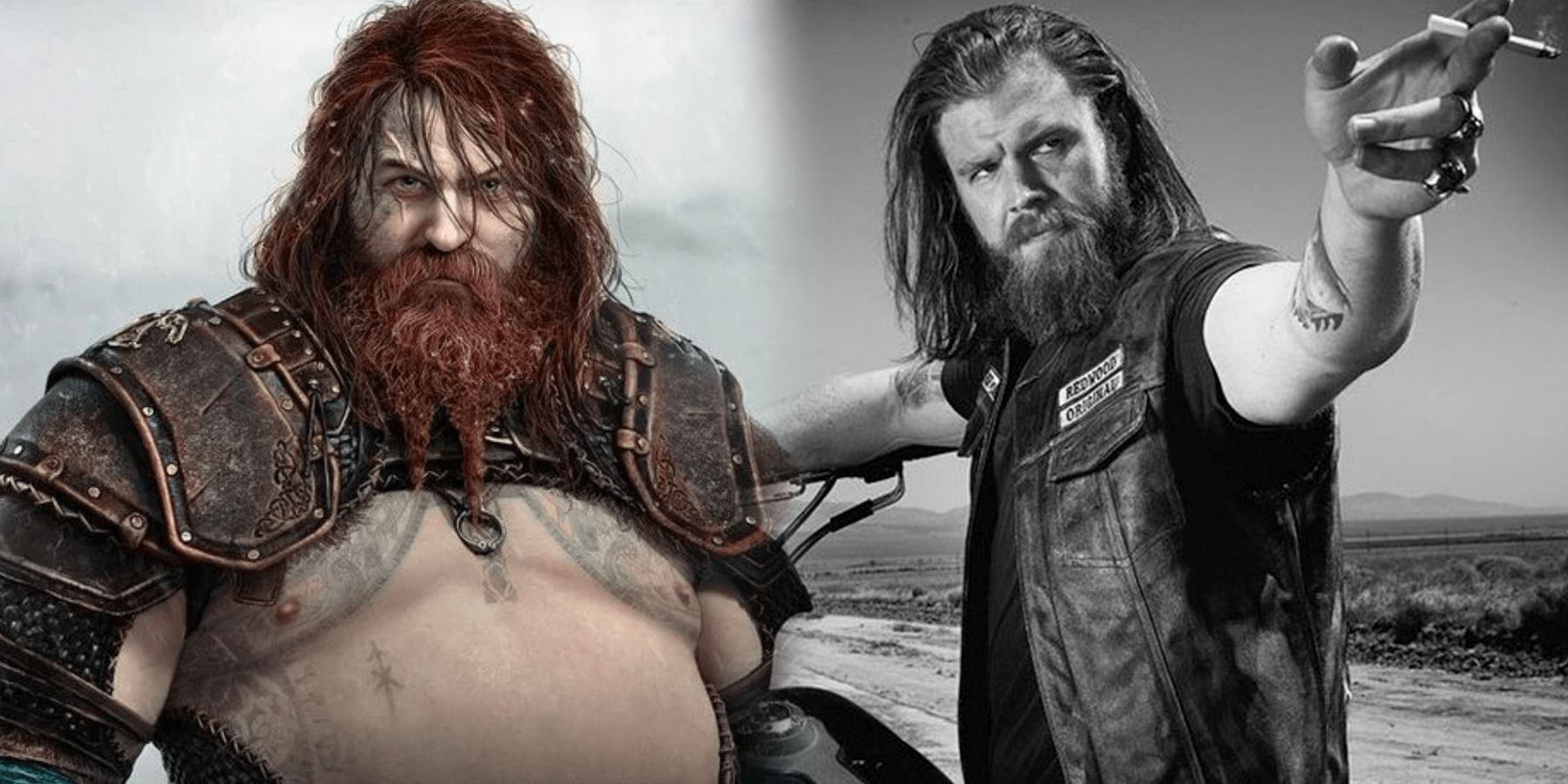
Physically, Thor is depicted as a massive, intimidating force. He is broad-shouldered, battle-scarred, and not presented as a polished or idealized god. His hammer, Mjölnir, remains a centerpiece of his power. But unlike Marvel’s take, there is no sense of “worthiness.” In God of War, Thor wields Mjölnir as a destructive extension of himself, a reminder of his strength and the blood he has spilled.
His persona matches his weapon. Thor is fearsome, yet beneath the violence lies exhaustion and resentment. He drowns his pain in drink, carrying the grief of his slain sons and the burden of living under Odin’s constant control. His relationship with power is not liberating; it is suffocating.
This mix of physical might and emotional turmoil makes Thor God of War one of the most grounded and layered depictions of the thunder god to date.
The Shadow of Odin
One cannot understand Thor without understanding Odin. As the All-Father, Odin manipulates, belittles, and controls Thor throughout God of War Ragnarök. Thor is not a free god but a pawn, used to enforce Odin’s rule.
Odin mocks Thor’s failures, reminds him of his losses, and demands obedience. Thor, though powerful enough to shake the realms, remains chained to his father’s approval. This toxic bond defines much of his personality: he is loyal to Odin, but that loyalty is built on fear, guilt, and dependency.
It is through Odin that Thor’s tragedy deepens. A god of storms reduced to an enforcer, he becomes a symbol of wasted potential and inner conflict.
Family and Loss
Beyond Odin, Thor’s family defines much of his arc. He is husband to Sif, who challenges him to rise above Odin’s manipulations, and father to Thrúd, who represents the hope for a different future. But his most haunting ties are to his dead sons, Magni and Modi, who were killed by Kratos and Atreus in the previous game.
This loss fuels his rage and grief. He resents Kratos for their deaths, yet he also blames himself for failing them. Thor’s grief is not expressed through tears but through violence and self-destruction. His family becomes both his strength and his curse — a reminder of what he fights for, but also what he has already lost.
Kratos and Thor: A Rivalry Beyond Battle
The clashes between Thor and Kratos are some of the most epic moments in God of War Ragnarök. But these confrontations are not just about physical combat. They are about ideology, legacy, and identity.
Kratos is a man who has spent years trying to escape the cycle of bloodshed, seeking redemption and teaching his son a better path. Thor, on the other hand, is a god trapped in that cycle, unable to break free from violence and manipulation.
In many ways, Thor is a mirror of Kratos’s past — a god defined by rage, loss, and servitude to a higher power. Their rivalry highlights the choices each character makes: Kratos chooses change, while Thor remains trapped. Their battles carry symbolic weight, showing that strength alone cannot break fate; only choice can.
Themes of Violence, Identity, and Redemption
Thor’s arc embodies some of the strongest themes in God of War Ragnarök.
Cycle of violence: Thor shows how violence perpetuates itself. Raised in bloodshed, he repeats the same patterns, unable to escape them.
Identity crisis: He is torn between being the God of Thunder and Odin’s weapon. The question of who Thor really is haunts his character.
Tragedy and redemption: Unlike Kratos, Thor never fully escapes his cycle. There are glimmers of humanity, moments where he questions his role, but his story ends as a tragedy rather than redemption.
These themes give Thor God of War emotional weight, making him not just an enemy but a character players can understand, if not forgive.
The Fate of Thor in Ragnarök
In Norse myth, Thor dies during Ragnarök in battle against the World Serpent. The God of War series echoes this destiny but with a unique twist.
During the final battles, Thor faces Kratos and Atreus, but instead of dying by their hands, he is betrayed by Odin. The All-Father strikes him down with his spear, discarding his own son when he no longer proves useful.
Thor’s death is devastating not because it is unexpected, but because of its bitter irony. A god who served Odin faithfully, even at the cost of his soul, is killed not by an enemy, but by the very father he tried to please. His death encapsulates his tragedy: used, manipulated, and discarded.
Legacy of Thor God of War
Thor’s journey leaves a lasting mark on the world of God of War. His death shakes Odin’s control, gives Thrúd the chance to redefine her destiny, and forces Kratos and Atreus to reflect on the cost of loyalty and violence.
For players, Thor’s arc is one of the most memorable aspects of Ragnarök. Many were struck by how the game reimagined a mythic god into a complex, human character. He is not just a thunder god with a hammer, but a father, a son, and a broken man whose story resonates long after the credits roll.
Conclusion
Thor God of War is a triumph of character writing. He is not simply a villain to defeat but a tragic figure shaped by violence, loss, and manipulation. His rivalry with Kratos is epic not only in its spectacle but in its symbolism, reflecting themes of choice, redemption, and identity.
In the end, Thor reminds us that even gods can be broken by the weight of family, legacy, and fate. His role in God of War Ragnarök is more than thunder and storms — it is the story of a god who could never escape his own chains, and whose tragedy makes the saga richer, darker, and more profoundly human.
FAQ
Who is Thor in God of War Ragnarök?
Thor in God of War Ragnarök is portrayed as a brutal enforcer for Odin, far darker and more tragic than his heroic comic book counterpart.
How is Thor different in God of War compared to Norse mythology?
In Norse myth, Thor is a protector of gods and humans, while in God of War he is reimagined as a conflicted, destructive figure driven by grief, rage, and Odin’s control.
Does Thor fight Kratos in God of War Ragnarök?
Yes. Thor battles Kratos in some of the game’s most epic encounters, symbolizing a clash of gods, but also a struggle between cycles of violence and the possibility of change.
What happens to Thor in God of War Ragnarök?
Thor meets a tragic fate when he is killed by Odin, highlighting his role as both a loyal son and a victim of manipulation.
Why is Thor God of War considered unique?
This version of Thor stands out because he is not just a villain, but a deeply human character torn between power, family, and the weight of destiny.
Also read :Disco Elysium for First-Timers: Tips I Wish I Knew