

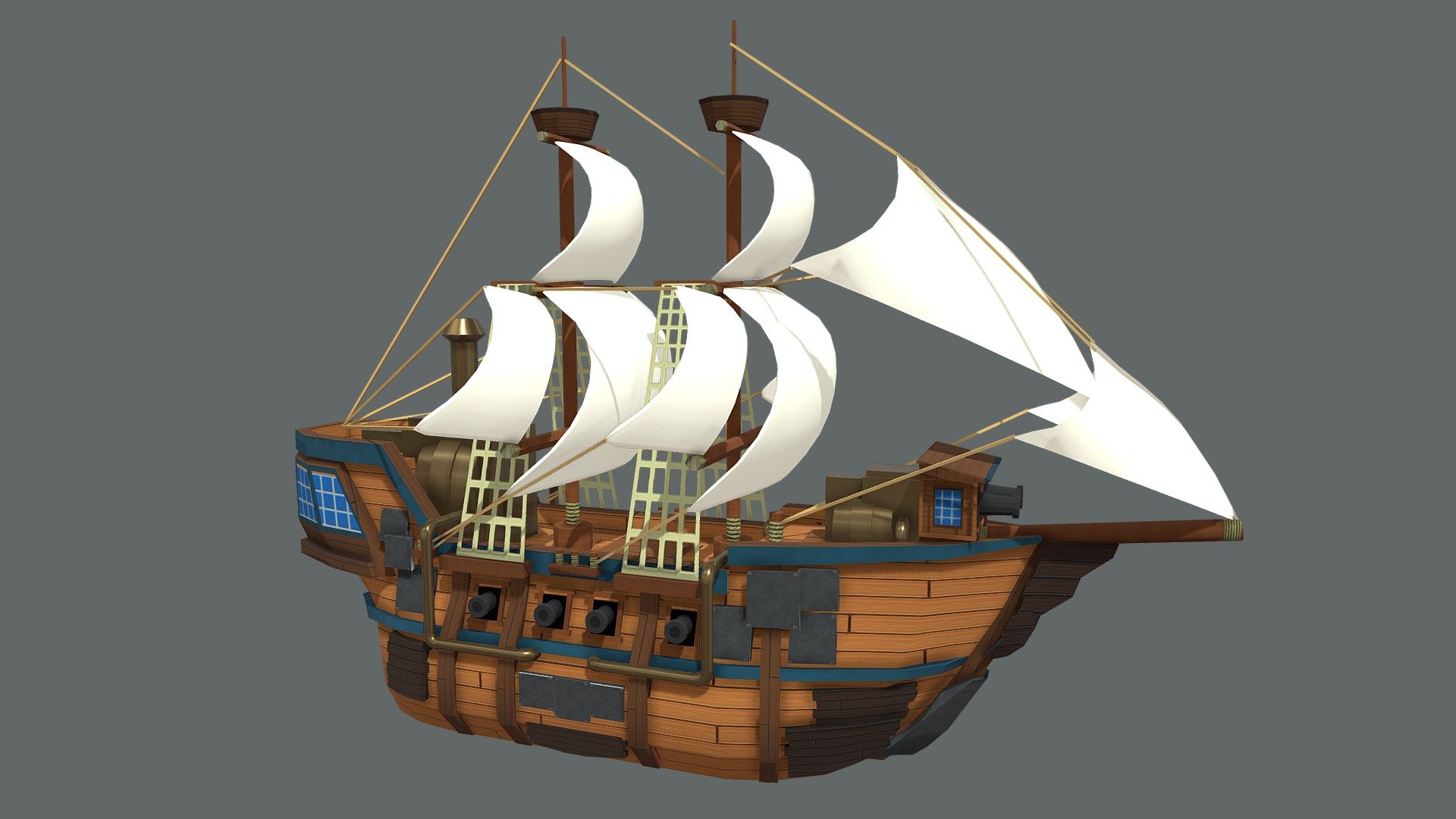
The sight of a ship has always sparked a sense of wonder. From ancient wooden galleons to massive steel battleships, these vessels carry stories of exploration, trade, and courage across the seas. Today, while many of these ships no longer exist in physical form, they are finding a new life in the digital world. Thanks to the rise of Ships 3D, classic vessels are no longer lost to history—they are being recreated with precision, artistry, and technology.
Ships 3D are not just digital models; they represent a bridge between the past and the present. They allow historians, educators, artists, and hobbyists to interact with maritime history in ways that were once impossible. In this article, we will explore how these models are created, why they matter, and how they are shaping the way we view the world’s naval heritage.
The Fascination with Ships
Ships are more than just transportation. They symbolize human ambition, discovery, and resilience. For centuries, ships carried explorers across unknown oceans, connected civilizations through trade, and served as powerful tools of defense in times of conflict. They are floating testaments to engineering, craftsmanship, and the spirit of adventure.
But as time moves forward, many of these historic vessels are lost to decay or dismantling. Some remain only in fragments in museums, while others survive in paintings or old photographs. This is where Ships 3D steps in, offering a chance to digitally preserve these legendary vessels so that their stories continue to inspire future generations.
What Are Ships 3D?
Ships 3D refers to digitally modeled recreations of ships using modern 3D design technologies. These can be highly detailed replicas of historic vessels or artistic interpretations designed for creative purposes. Unlike physical models, which take months of manual craftsmanship, digital models can be built, adjusted, and refined with software.
Creators often use professional tools like Blender, Maya, 3ds Max, or CAD systems to design these models. In some cases, actual shipwrecks or surviving ships are scanned with laser technology or photogrammetry to produce accurate 3D representations. The result is a virtual model that can be studied, displayed, animated, or even placed into virtual reality experiences.
The Art and Science of 3D Modeling
Bringing a ship to life digitally requires both technical skill and artistic vision. Designers often begin with historical blueprints, paintings, or photographs of the ship. Every curve of the hull, every mast, and every detail of the deck needs to be accurately captured.
Advanced techniques like photogrammetry allow experts to take thousands of photos of a real ship or wreck and stitch them together into a 3D model. This ensures that proportions and details remain true to the original. However, not all ships have surviving blueprints or photos, which means artists must combine research with creative interpretation.
The challenge lies in striking the right balance between historical accuracy and visual storytelling. Too much artistic freedom can distort history, but too much focus on technical detail may result in a lifeless model. The best Ships 3D designs manage to capture both the accuracy and the soul of the vessel.
Preserving Maritime History
One of the most important contributions of Ships 3D is the preservation of maritime history. Many iconic ships, like the RMS Titanic or ancient Greek triremes, can never sail again. But in digital form, they can be studied and admired by people worldwide.
Museums and universities are increasingly using 3D ship models to archive and display their collections. Instead of relying on fragile wooden models or limited photographs, visitors can interact with immersive 3D displays. These digital reconstructions also ensure that knowledge is not lost even if physical artifacts deteriorate over time.
For example, maritime archaeologists often use 3D scanning to capture shipwrecks on the ocean floor. These models allow researchers to study structures that are otherwise inaccessible. This means that ships lost beneath the sea centuries ago can still tell their stories through digital reconstructions.
Ships 3D in Media and Entertainment
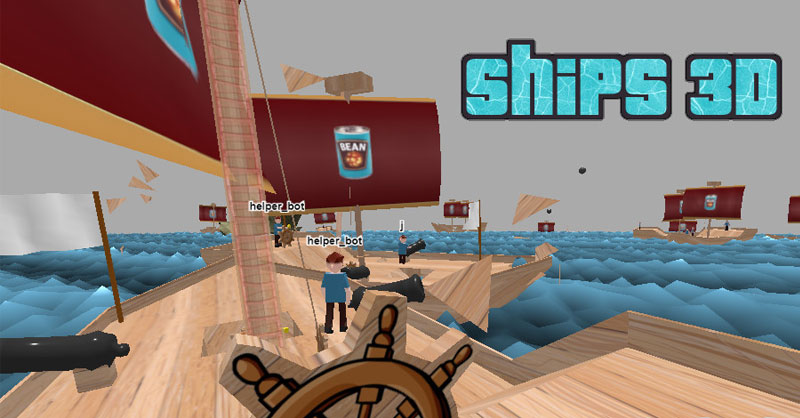
Beyond preservation, Ships 3D have found a vibrant role in entertainment. Film studios and game developers rely on them to create authentic seafaring experiences. From blockbuster movies depicting epic naval battles to video games that let players command fleets, 3D ship models make storytelling immersive and believable.
Virtual reality (VR) and augmented reality (AR) are taking this even further. Imagine stepping onto the deck of a 17th-century galleon or exploring the cabins of the Titanic through a VR headset. With detailed 3D models, these experiences are no longer limited to imagination—they become interactive adventures.
Such use of Ships 3D has also sparked renewed interest in maritime history among younger audiences. For many, seeing a ship in action through a game or movie is more engaging than reading about it in a textbook.
Educational Value
Education is another field where Ships 3D are making a difference. Students can study the design of ships from different eras, analyze their engineering, and even compare vessels from various cultures. These models provide a hands-on approach to learning history, engineering, and art.
Digital ship models are also valuable for naval architecture programs. Students training to design modern ships can learn from the structures of historical ones, studying how they were built and how they performed at sea. Interactive 3D tools make these lessons more engaging than static diagrams.
For younger learners, interactive exhibits featuring Ships 3D encourage curiosity. A child who explores a virtual Viking longship may be inspired to learn more about history, archaeology, or engineering.
The Creative Side
Not all Ships 3D are built for museums or films. Many are created by hobbyists and digital artists who see ships as a canvas for creativity. Online platforms allow designers to share their creations, and some even sell 3D ship models for use in projects, games, or animations.
This creative culture has grown into a community where artists exchange ideas, techniques, and designs. Just as shipbuilding once brought craftsmen together in shipyards, digital modeling brings creators together in virtual workshops.
For many artists, building a ship in 3D is a way to connect with history, challenge their skills, and express their creativity in a medium that blends art and technology.
The Future of Ships 3D
The future looks promising for Ships 3D. With advancements in AI, VR, AR, and holographic technology, digital ships may soon become even more immersive and interactive. Imagine holographic ships projected in museum halls, or virtual tours where visitors can sail across digital oceans.
There is also potential for interactive digital shipyards, where people can not only explore historical vessels but also build their own in virtual space. Such innovations could reshape how we experience maritime history, education, and entertainment.
As technology evolves, so too does our ability to preserve the past. Ships that once disappeared into the waves are now finding a second life in the digital world.
Conclusion
Ships 3D are more than digital objects—they are vessels of memory, culture, and imagination. They preserve the legacy of ships that defined human history, offer new ways to experience the seas, and inspire creativity across the world. Whether used in museums, classrooms, or entertainment, they stand as a reminder that the spirit of exploration never truly fades.
By bringing classic vessels to life in the digital world, Ships 3D ensure that our connection to the sea remains strong, even in an age where most of us no longer sail. They are proof that technology, when combined with history and artistry, can keep the past alive for generations to come.